Ezekiel 44-48 Statutes

God has shown Ezekiel the Temple. Now He gives him the statutes for the people as well as divides the land between the tribes of Israel.
Though God didn’t divide this vision for Ezekiel, I had to. There is just so much to it. Today we will focus on the regulation of coming before the Lord, including the sacrifices to be brought. We will also see God divide the land between the tribes of Israel. It is NOT haphazard, like Israel did in the beginning, but is ordered, fair, and equal.
Let’s rejoin Ezekiel as he continues to hear from the Lord in this amazing vision. Holy Spirit, continue to guide me along this journey. Show me what You want me to focus on and how to apply the lessons to my life.
♥ ♦ ♥
Ezekiel is in awe and on his face before the Lord as His presence fills the Temple. The Lord speaks to him again.
“Son of man, mark well, see with your eyes, and hear with your ears all that I shall tell you concerning all the statutes of the temple of the Lord and all its laws. And mark well the entrance to the temple and all the exits from the sanctuary. And say to the rebellious house, to the house of Israel, Thus says the Lord God: O house of Israel, enough of all your abominations, in admitting foreigners, uncircumcised in heart and flesh, to be in my sanctuary, profaning my temple, when you offer to me my food, the fat and the blood. You have broken my covenant, in addition to all your abominations. And you have not kept charge of my holy things, but you have set others to keep my charge for you in my sanctuary” (Ezekiel 44:5-8).
The Lord continues with all the requirements for who may approach Him and who may come into His Temple.
“Thus says the Lord God: No foreigner, uncircumcised in heart and flesh, of all the foreigners who are among the people of Israel, shall enter my sanctuary. But the Levites who went far from me, going astray from me after their idols when Israel went astray, shall bear their punishment. They shall be ministers in my sanctuary, having oversight at the gates of the temple and ministering in the temple. They shall slaughter the burnt offering and the sacrifice for the people, and they shall stand before the people, to minister to them. Because they ministered to them before their idols and became a stumbling block of iniquity to the house of Israel, therefore I have sworn concerning them, declares the Lord God, and they shall bear their punishment. They shall not come near to me, to serve me as priest, nor come near any of my holy things and the things that are most holy, but they shall bear their shame and the abominations that they have committed. Yet I will appoint them to keep charge of the temple, to do all its service and all that is to be done in it” (Ezekiel 44:9-14).
Ezekiel’s heart hurts for these Levites. To be so close to God, but still held at arm’s length. These Levites are still part of the tribe of Levi, but they are bearing the punishment for their own sins.
“But the Levitical priests, the sons of Zadok, who kept the charge of my sanctuary when the people of Israel went astray from me, shall come near to me to minister to me. And they shall stand before me to offer me the fat and the blood, declares the Lord God. They shall enter my sanctuary, and they shall approach my table, to minister to me, and they shall keep my charge. When they enter the gates of the inner court, they shall wear linen garments. They shall have nothing of wool on them, while they minister at the gates of the inner court, and within. They shall have linen turbans on their heads, and linen undergarments around their waists. They shall not bind themselves with anything that causes sweat. And when they go out into the outer court to the people, they shall put off the garments in which they have been ministering and lay them in the holy chambers. And they shall put on other garments, lest they transmit holiness to the people with their garments. They shall not shave their heads or let their locks grow long; they shall surely trim the hair of their heads. No priest shall drink wine when he enters the inner court. They shall not marry a widow or a divorced woman, but only virgins of the offspring of the house of Israel, or a widow who is the widow of a priest. They shall teach my people the difference between the holy and the common, and show them how to distinguish between the unclean and the clean. In a dispute, they shall act as judges, and they shall judge it according to my judgments. They shall keep my laws and my statutes in all my appointed feasts, and they shall keep my Sabbaths holy. They shall not defile themselves by going near to a dead person. However, for father or mother, for son or daughter, for brother or unmarried sister they may defile themselves. After he has become clean, they shall count seven days for him. And on the day that he goes into the Holy Place, into the inner court, to minister in the Holy Place, he shall offer his sin offering, declares the Lord God” (Ezekiel 44:15-28).
“What a difference faithfulness makes” thinks Ezekiel. This family line is the only one to be allowed into God’s direct presence. They are the judges for the people. And they will teach them the things of God.
“This shall be their inheritance: I am their inheritance: and you shall give them no possession in Israel; I am their possession. They shall eat the grain offering, the sin offering, and the guilt offering, and every devoted thing in Israel shall be theirs. And the first of all the firstfruits of all kinds, and every offering of all kinds from all your offerings, shall belong to the priests. You shall also give to the priests the first of your dough, that a blessing may rest on your house. The priests shall not eat of anything, whether bird or beast, that has died of itself or is torn by wild animals” (Ezekiel 44:29-31).
Neither group of Levites is cast out from the presence of God, but their reward is vastly different. The most significant part of that reward is their proximity to the Lord Himself. God next allots land to the whole nation of Israel. He starts with the Levites. Even in their allotment, there is a distinction.
A section of land, 25,000 by 25,000 cubits is set aside for the Lord. A center section, measuring 25,00 by 10,000 is the most holy land. It is set aside for the Temple itself and for the sons of Zadok who minister before the Lord. Another section equal to this is set aside for the rest of the tribe of Levi. In these two parcels, the Levites will build their homes and live before the Lord. The remaining 25,000 by 5,000 cubits space is for the whole house of Israel but God chooses to wait to address its purpose and features until later.
Ezekiel keeps listening to everything being told to him. He is trying to capture every detail; and there are PLENTY of details to take in! “I wish I had a reed and tablet to record all of this” thinks Ezekiel.
Before that thought can even evaporate in his mind, he feels the man at his elbow. “When the time comes for you to write this down, not a single feature will escape your memory. I will be with you to help you recall in full detail all that you have seen and heard.”
Ezekiel breathes a sigh of relief, but does not lessen his intensity of focus. He wants to take it all in.
Focus shifts to economic standards. God sets standards for Israel’s weights and measurements. He also sets standards for their money.
“You shall have just balances, a just ephah, and a just bath. The ephah and the bath shall be of the same measure, the bath containing one tenth of a homer, and the ephah one tenth of a homer; the homer shall be the standard measure. The shekel shall be twenty gerahs; twenty shekels plus twenty-five shekels plus fifteen shekels shall be your mina” (Ezekiel 45:10-12).
“This will be a welcome relief, Lord. Too many people claim ignorance of standards set out by other men. This is set by You and will stand the test of time.”
God now focuses on the prince of Israel that is to come. Israel will have no king but God in the day of this Temple. To the prince, he will receive the portion east and west of the holy portion set aside for the Lord. It will be the same length, north to south, as that set apart for the Lord. In this land, the prince will have his home, crops, and herds. From these flocks and herds, the prince shall supply the offerings for the people of Israel. And to these flocks and herds, the people of Israel shall contribute their portion; which is prescribed by the Lord.
“This is the offering that you shall make: one sixth of an ephah from each homer of wheat, and one sixth of an ephah from each homer of barley, and as the fixed portion of oil, measured in baths, one tenth of a bath from each cor (the cor, like the homer, contains ten baths). And one sheep from every flock of two hundred, from the watering places of Israel for grain offering, burnt offering, and peace offerings, to make atonement for them, declares the Lord God. All the people of the land shall be obliged to give this offering to the prince in Israel” (Ezekiel 45:13-15).
From this, the prince shall provide for the offerings of the people.
“It shall be the prince’s duty to furnish the burnt offerings, grain offerings, and drink offerings, at the feasts, the new moons, and the Sabbaths, all the appointed feasts of the house of Israel: he shall provide the sin offerings, grain offerings, burnt offerings, and peace offerings, to make atonement on behalf of the house of Israel” (Ezekiel 45:17) the Lord says to Ezekiel.
Ezekiel nods. “That seems fair.” As he thinks about this, he wonders how this will be enforced. “Will there be someone who checks on this, or who monitors what comes in and out of each home?” After a moment, he lets this concern go. He KNOWS that the Lord can easily ensure what is right being carried out. “You can handle monitoring, this Lord. Of this, I have no doubt.”
God identifies several specific days that the prince will provide the sacrifice for the people.
The first in this list of days is the first day of the first month. The second is, the seventh of this same month. There are no corresponding holidays for these two dates with the original holidays that God gave the people in His Law. The next day God lists is very familiar to Ezekiel. It is the 14th day of the first month; Passover. God also includes the first day of the seventh month, which corresponds to the Feast of Trumpets, and the 15th day of that same month, corresponding to the Feast of Booths. Ezekiel wonders if there will be a significance brought to the first two days listed by the Lord. Whatever it is, he is certain that the people of the day of this Temple will recognize it and honor the Lord appropriately.
Ezekiel’s attention is directed to the inner Eastern Gate. The doors to this gate are closed, as the outer doors of the outer Eastern Gate. God has a reason and a purpose for the doors being closed. He shares that with Ezekiel.
“The gate of the inner court that faces east shall be shut on the six working days, but on the Sabbath day it shall be opened, and on the day of the new moon it shall be opened. The prince shall enter by the vestibule of the gate from outside, and shall take his stand by the post of the gate. The priests shall offer his burnt offering and his peace offerings, and he shall worship at the threshold of the gate. Then he shall go out, but the gate shall not be shut until evening. The people of the land shall bow down at the entrance of that gate before the Lord on the Sabbaths and on the new moons” (Ezekiel 46:1-3).
Ezekiel contemplates these words and the two Eastern Gates. “God entered by the Eastern Gate and closed it behind Himself. This allows no other gods to enter. The inner gate serves the one God put over His people. But even he has restrictions and requirements he must follow. The people cannot enter either of the Eastern Gates. ‘Look but don’t touch’.”
The man beside Ezekiel approves of Ezekiel’s understanding. He smiles at Ezekiel but remains silent. God has more to set down Himself.
“When the people of the land come before the Lord at the appointed feasts, he who enters by the north gate to worship shall go out by the south gate, and he who enters by the south gate shall go out by the north gate: no one shall return by way of the gate by which he entered, but each shall go out straight ahead. When they enter, the prince shall enter with them, and when they go out, he shall go out” (Ezekiel 46:9-10).
“No turning around and going back. This could be seen as how the Lord wants us to act when we repent. No turning around and going back to the same way we were walking before”, Ezekiel says to himself.
The man beside him nods his head. “The Lord picked well when He chose this one” he thinks to himself.
God continues by laying out the required sacrifices, including the daily sacrifice that is to be presented daily in this Temple. It is the same as what was supposed to be presented in the Temple Solomon built and the Tabernacle during their times.
Ezekiel follows the man through the Northern Gates and into the inner courtyard. The man points out a place beside the priest’s chambers at the extreme western end of this side of the building. There is a small cooking area.
“This is the place where the priests shall boil the guilt offering and the sin offering, and where they shall bake the grain offering, in order not to bring them out into the outer court and so transmit holiness to the people” (Ezekiel 46:20).
This makes sense to Ezekiel. As these are the most holy offerings, they remain completely within the inner courtyard. No part of this holy offering leaves the inner court. It is even consumed in the dining rooms of the inner court for the priests who presented it; the sons of Zadok.
The man leads Ezekiel out of the inner courtyard through the Southern Gate and into the outer courtyard. The man leads Ezekiel to each of the four corners of this courtyard. In each corner there was a space of 40 cubits by 30 cubits. Each space had masonry shelves lining two of the three sides. It had hearths at the bottom of the rows.
“These are the kitchens where those who minister at the temple shall boil the sacrifices of the people” (Ezekiel 46:24).
“The Levites who are not the sons of Zadok will serve the people here” mused Ezekiel.
The man leads Ezekiel back into the inner courtyard and to the steps of the Temple structure. Here, he points out a new feature that Ezekiel did not see before. It is a stream flowing out of the House of the Lord. It is flowing from under the southern side of the entrance to the Temple. It was not deep or wide, but it was flowing steadily from its place of origin. It was flowing to the east and passed by the south side of the altar and kept on going, right past the inner and outer Eastern Gates.
As Ezekiel watches the flowing stream, he senses his guide’s shift in direction and follows him back outside of the Temple complex using the Northern Gates. Once outside the complex, the man leads Ezekiel to the eastern side and they locate the stream that is trickling steadily past the southern side of the Eastern Gate.
The man sets off walking along the northern bank of the stream. He measures off 1,000 cubits. Ezekiel follows obediently beside him.
“Let’s cross here” the man tells Ezekiel.
The two step into the stream and the water reaches their ankles. They proceed along the southern bank of the stream for another 1,000 cubits.
“We will cross here as well” the man says.
They step into the water again and it is up to their knees. The water is refreshing as they move through it, back to the northern bank. They travel another 1,000 cubits and cross the river again. This time the water is up to their waists. Another 1,000 meters brings them to another crossing. This time, Ezekiel cannot cross the water. It is so high that he would have to swim. The small stream is now a full-fledged river.
After this ‘failed attempt’ at crossing the river, the man turns to Ezekiel and says; “Son of man, have you seen this?” (Ezekiel 47:6).
Ezekiel looks at him with confusion. Of course he has seen this river. He nearly drowned trying to cross it before returning to the bank. But that is not what the man is focusing on. The man leads Ezekiel back along the bank of the river where he notices trees growing on both banks. A LOT of trees! Ezekiel wonders how he missed these as they walked the first time. “Maybe they weren’t hear earlier” he thinks to himself. It doesn’t matter though because he certainly notices them now.
The man beside him speaks. “This water flows toward the eastern region and goes down into the Arabah, and enters the sea; when the water flows into the sea, the water will become fresh. And wherever the river goes, every living creature that swarms will live, and there will be very many fish. For this water goes there, that the waters of the sea[e] may become fresh; so everything will live where the river goes. Fishermen will stand beside the sea. From Engedi to Eneglaim it will be a place for the spreading of nets. Its fish will be of very many kinds, like the fish of the Great Sea. But its swamps and marshes will not become fresh; they are to be left for salt. And on the banks, on both sides of the river, there will grow all kinds of trees for food. Their leaves will not wither, nor their fruit fail, but they will bear fresh fruit every month, because the water for them flows from the sanctuary. Their fruit will be for food, and their leaves for healing” (Ezekiel 47:8-12).
“That’s AMAZING” thinks Ezekiel. He would love to reach out and grab a handful, but his guide keeps them moving. When the two reach the Temple complex, the Lord speaks to Ezekiel again.
“It is time to divide up the land for the tribes of Israel.”
“Lord, I thought the land was already divided by tribe.”
“Yes. The people divided it. But their divisions are not my divisions. And some of the tribes had much more than others did. I will remedy this in my assignment for each tribe.”
Ezekiel waits patiently as God first sets the boundaries of the land.
“This shall be the boundary of the land: On the north side, from the Great Sea by way of Hethlon to Lebo-hamath, and on to Zedad, Berothah, Sibraim (which lies on the border between Damascus and Hamath), as far as Hazer-hatticon, which is on the border of Hauran” (Ezekiel 47:15-16).”
Ezekiel looks to the north. Not that he can see the places God identified as the northern boundary.
“On the east side, the boundary shall run between Hauran and Damascus; along the Jordan between Gilead and the land of Israel; to the eastern sea and as far as Tamar” (Ezekiel 47:18).
Ezekiel begins drawing a map in his head.
“On the south side, it shall run from Tamar as far as the waters of Meribah-kadesh, from there along the Brook of Egypt to the Great Sea” (Ezekiel 47:19).
Ezekiel is sure he can supply the final border; especially using the map the Lord is providing for him.
“On the west side, the Great Sea shall be the boundary to a point opposite Lebo-hamath” (Ezekiel 47:20).
Ezekiel likes knowing the boundaries of the territory. “Will any contend with Israel, Lord? At that time over her boundaries?”
“No. I have fixed them and none will contest them.”
Ezekiel waits patiently for the Lord to give him the boundaries for each tribe.
“So you shall divide this land among you according to the tribes of Israel. You shall allot it as an inheritance for yourselves and for the sojourners who reside among you and have had children among you. They shall be to you as native-born children of Israel. With you they shall be allotted an inheritance among the tribes of Israel. In whatever tribe the sojourner resides, there you shall assign him his inheritance, declares the Lord God” (Ezekiel 47:21-23).
Ezekiel’s eyes open wide. This is the first time the Lord has told His people to actually give an inheritance to the ‘sojourner’. They have been told to welcome them, but not to treat them as one with themselves. For an inheritance stays ‘in the family’. But if God commands it, he will obey it, and share it with the people.
“Each tribe shall have a portion 25,000 cubits long and stretch from the great sea on the western boundary to the eastern boundary that I have set for the people. The tribe of Joseph shall have two portions; for Ephraim and Manasseh. Divide the territories like this:
“First, along the northern boundary of Israel is the tribe of Dan. Adjoining the territory of Dan, will be that of the tribe of Asher. Adjoining Asher shall be the tribe of Naphtali. Adjoining Naphtali shall be the tribe of Manasseh. Adjoining Manasseh shall be the tribe of Ephraim. Adjoining the tribe of Ephraim shall be the tribe of Ruben. Adjoining the tribe of Reuben shall be the tribe of Judah.
“On the southern side of Judah shall be the territory set aside for the Lord. The portion of land that is decreed as holy; 25,000 cubits by 25,000 cubits. Divide it as I have instructed you to do earlier. On the east and west side of this land that is holy, is the portion for the prince. The Levites, who have as their inheritance two portions, each measuring 25,000 by 10,000 cubits shall NOT sell any of the land. It is holy unto Me. The remaining 5,000 by 25,000 cubits portion is for the use of the people of the city.
“The city shall set in the center third of this portion. It shall be 4,500 cubits square with 250 cubits on all sides as open land. No houses are to be built in this open land. The portions on the east and west of the city will be used for produce for the people of the city. The people of the city shall till this land and eat thereof.
“On the southern side of this portion shall be the allotment of Benjamin. Adjoining the tribe of Benjamin shall be the tribe of Simeon. Adjoining the tribe of Simeon shall be the tribe of Issachar. Adjoining the tribe of Issachar shall be the tribe of Zebulun. Adjoining the tribe of Zebulun shall be the tribe of Gad. The tribe of Gad will reach to the southern border that I have set for the land.”
Ezekiel makes a picture in his mind of this new map of Israel. It is MUCH easier to envision than the original division of the land. The Lord then returns His attention back to the city.
“These shall be the exits of the city: On the north side, which is to be 4,500 cubits by measure, three gates, the gate of Reuben, the gate of Judah, and the gate of Levi, the gates of the city being named after the tribes of Israel. On the east side, which is to be 4,500 cubits, three gates, the gate of Joseph, the gate of Benjamin, and the gate of Dan. On the south side, which is to be 4,500 cubits by measure, three gates, the gate of Simeon, the gate of Issachar, and the gate of Zebulun. On the west side, which is to be 4,500 cubits, three gates, the gate of Gad, the gate of Asher, and the gate of Naphtali. The circumference of the city shall be 18,000 cubits. And the name of the city from that time on shall be, The Lord Is There” (Ezekiel 48:30-35).
Ezekiel’s eyebrows raise at the designation for a gate for the tribe of Levi and Joseph. Thinking it over, this makes sense though. “If Joseph were to have two portions, as with the division of the land, the tribe of Levi would have no part of the city of the Lord. They would be left out” he thinks to himself.
Again, Ezekiel’s guide is amazed by his ability to grasp the Lord’s heart. He is pleased to have been part of Ezekiel’s vision and mission.
“It is time to return to the people” he tells Ezekiel.
Ezekiel takes one last look around. This will be a vision he cherishes for the rest of his days. The Temple of the Lord, the restored people of Israel, and the presence of the Lord among His people.
A moment later, Ezekiel opens his eyes to his surroundings and sees only his small home. He stays where he is, kneeling before the Lord, until his heart fully settles. While he sits still, he begins to make mental notes of what he will need to record this prophecy. “This prophecy must be inscribed on the best of clay tablets; and baked!”
After making this decision, Ezekiel rises from his place and begins his morning. He is surprised that it is still morning. By the length and breadth of his vision, he expected that hours would have passed, but they didn’t.
As soon as he has eaten his breakfast, Ezekiel begins his search for the best clay tablets and reeds. It takes him all day to gather the pieces he needs. He has to take several trips to transport his tablets as there are many of them and they are quite heavy. He doesn’t want to run out of tablets while he writes down the vision.
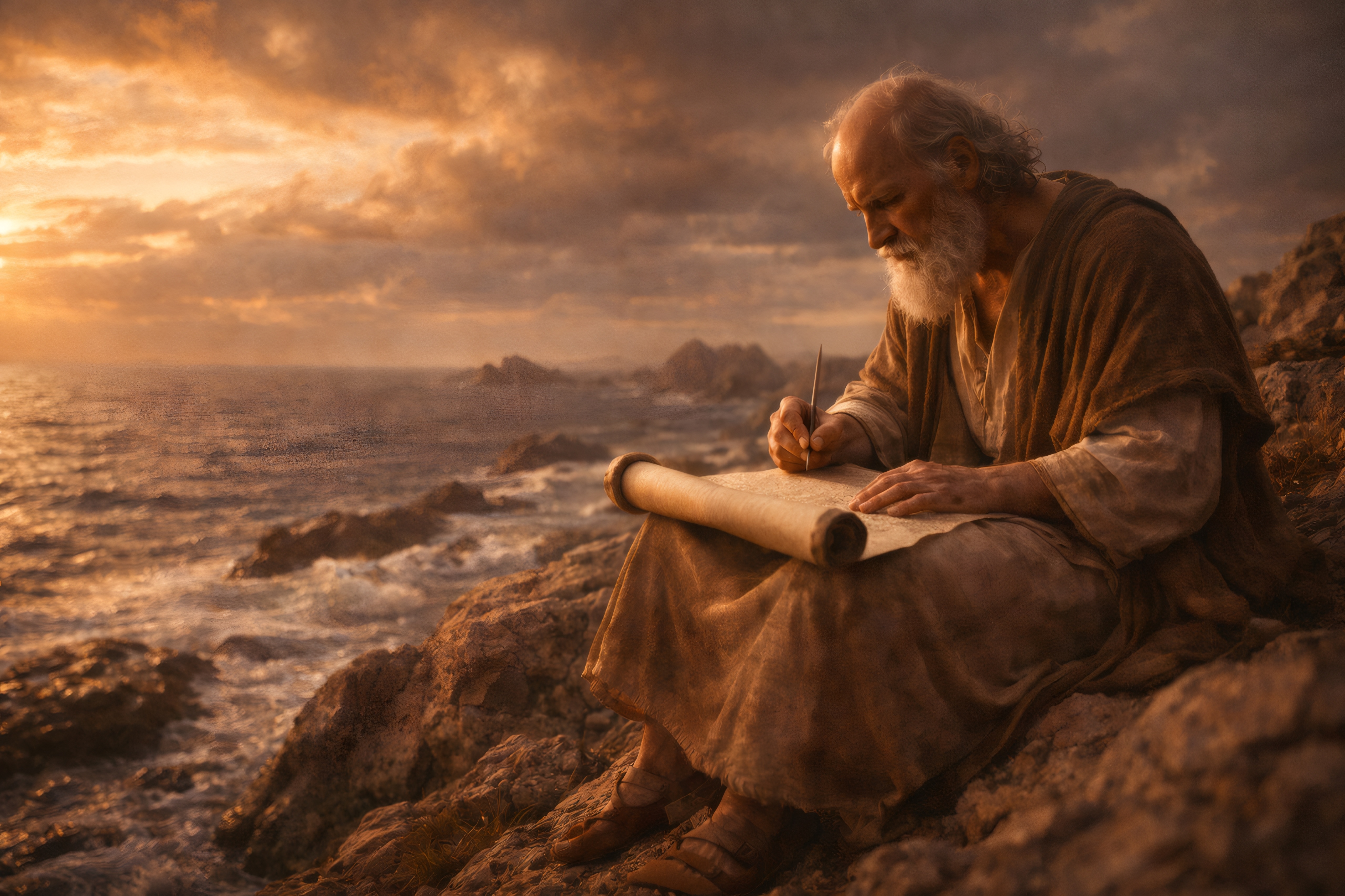
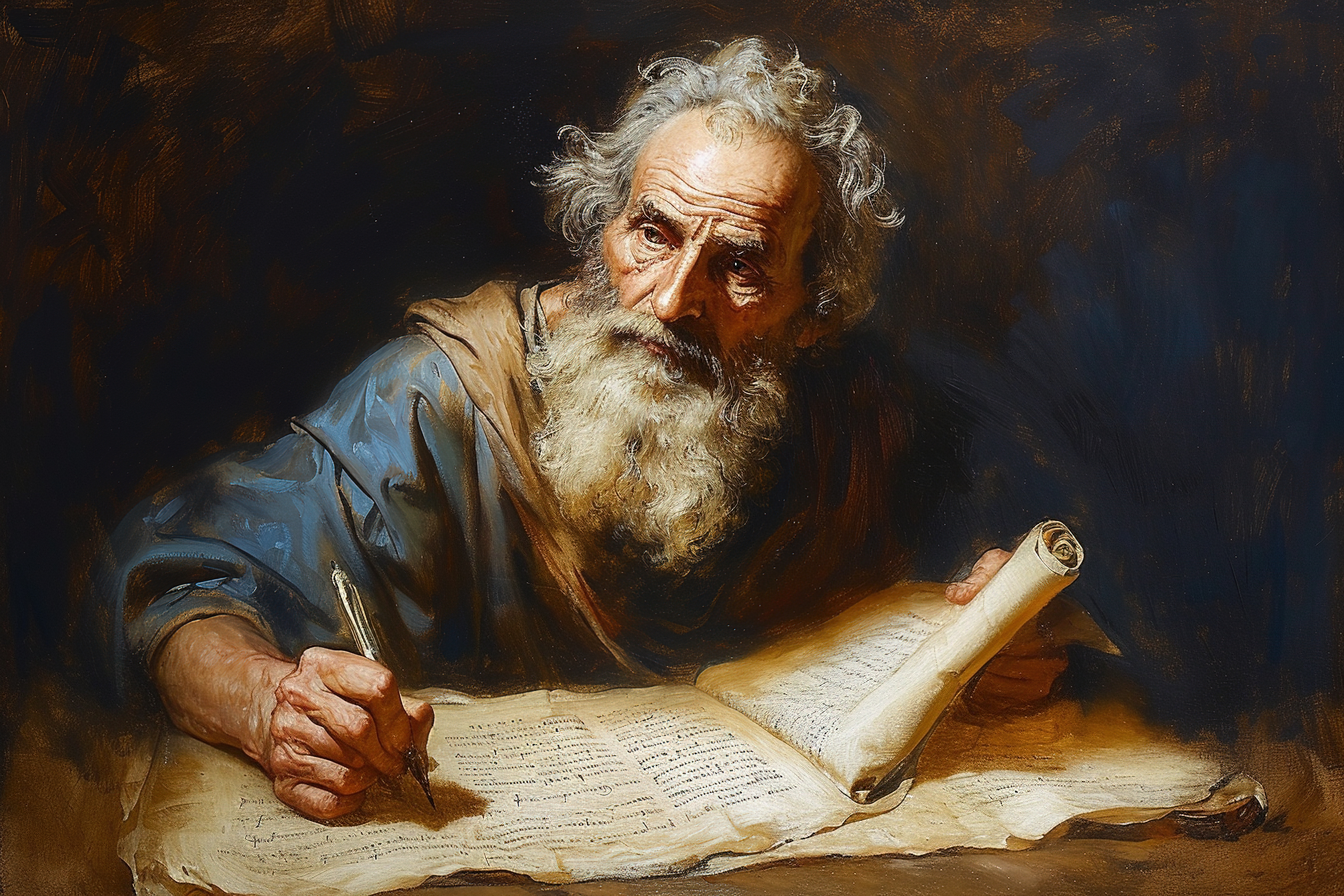
It takes Ezekiel a painstaking month to record all the details and to draw a diagram of the Temple he was shown. Fortunately for him, clay is forgiving before it is fired, and he could correct mistakes made along the way.
Just as the man promised, Ezekiel did not forget a single thing he was shown. Not the width of a threshold or an item for an offering escaped his memory. Every time he felt as though he was missing something, all he had to do was stop, and allow the memory of the vision to replay in his mind and heart. And with each reply of the vision, he saw the man standing beside him nodding his head and smiling.
When the last character was inscribed on the final tablet, Ezekiel breathes a sigh of relief. “Now all that is left is to bake these” Ezekiel tells himself.
This process takes a LOT longer than gathering the materials initially did. He has to transport the tablets in single layers to the oven. Stacking them would impact the writing contained on each.
Ezekiel keeps the oven tenders working for six weeks before his final tablet is thoroughly baked. He brings a fresh tablet and takes away a completed one every trip. They are heavy and require Ezekiel to build more shelves to store them on. His house is nearly overflowing with the prophecies that the Lord has given him over the last 20 years.
“Maybe it is a relief for my wife that the Lord took her so long ago. I don’t think she would approve of all these tablets and the space they claim.”
Ezekiel holds this prophecy from the people until the Lord moves his heart to share it. He was supposed to reserve it for the time when Israel was ashamed of their abominations. And he shares this prophecy, not in the marketplace, but in the presence of the elders. The people will hear of this hope, but they will have to rely on their elders to hold the blueprints for what is to come.
♥ ♦ ♥
We have come to the end of Ezekiel, but we have not come to the end of his prophecies. We are still waiting for this final prophecy to be fulfilled. I don’t know how many years still remain before this prophecy comes to pass. But I don’t need to know. God does, and that is enough for me. I hope it is enough for you.
Father God, I know You won’t answer the ‘when’ question, so I’m not even going to ask. What I am going to do is keep my heart and mind turned to You. Will I be one of those ‘sojourners’ who have an inheritance among the tribes of Israel? I know I’m Your child, but how does that look in Your kingdom here on earth? Another question You aren’t going to answer for me yet. I can wait… I TRUST YOU with it ALL.