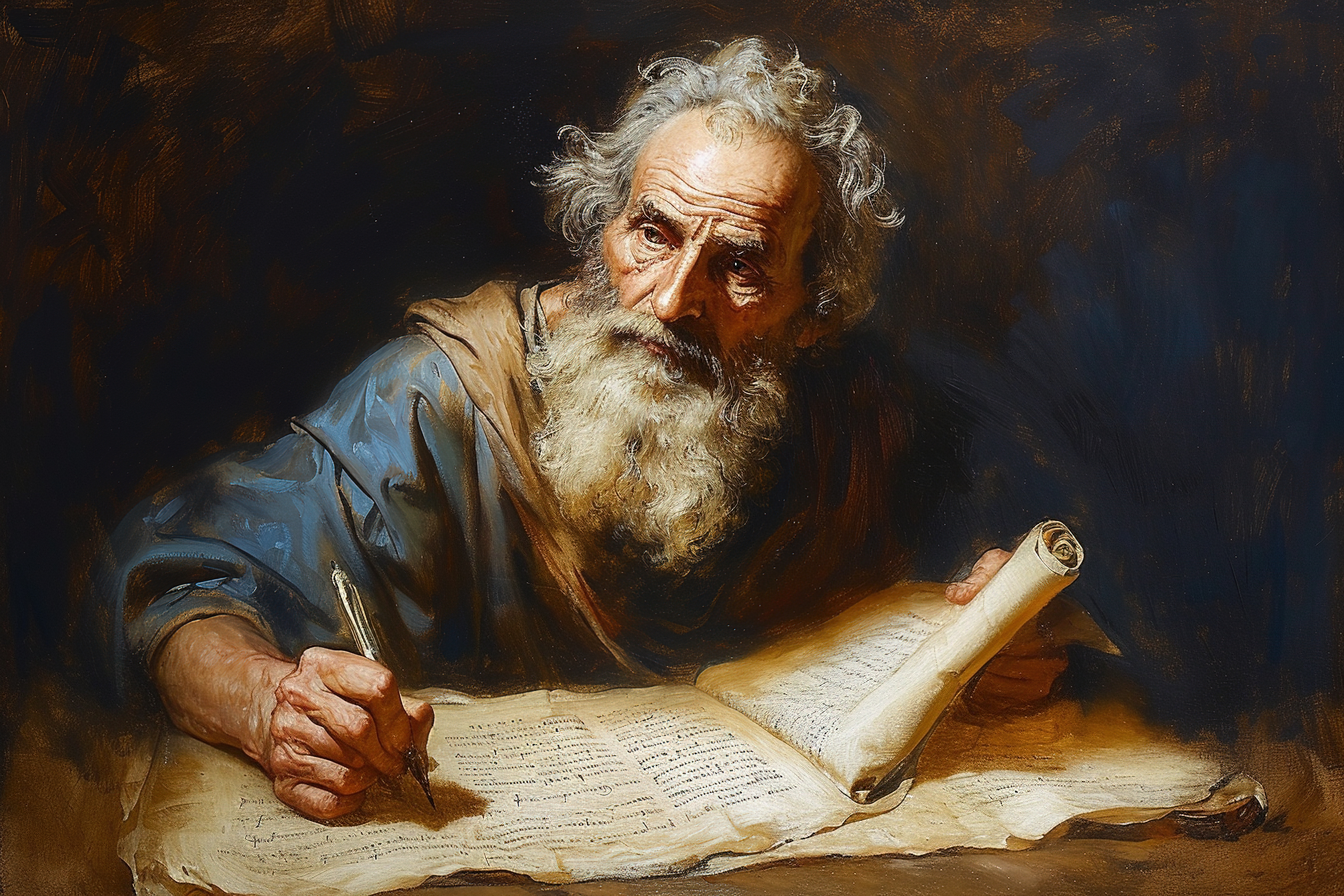

Nehemiah 1-2 Reports
Nehemiah remained in Babylon when Ezra left. It has been 13 years since that time and reports reach him of the state of Jerusalem. And it is dire.
Persia is still under the rule of the same king, Artaxerxes, who granted Ezra his freedom. He respects Israel’s God and asked Ezra to offer sacrifices to Him on his behalf. Keeping up with the goings on in Jerusalem isn’t his priority though.

Nehemiah is cup bearer to Artaxerxes. He is content in his position, until he hears from his own brother about a problem that should have been addressed much earlier. Nehemiah’s heart is troubled and he feels the pull of God to return to his people’s homeland. A land he has never personally seen.
Let’s step back into our story a little before Nehemiah enters it. Holy Spirit lead our journey today.
♥ ♦ ♥
Ezra has been back in the land of his fathers for ten years. The people value his teachings very much. He had renewed the hearts of those who returned from exile and revived their desire to follow the Laws of Moses.
If they are being totally honest, Ezra’s insistence that they put away their foreign wives was HARD. It not only broke up families in Judah, but it caused animosity among their neighbors.
It was a slap in the face, as the wives and children returned to the land of their mothers. The people had to decide what to do with this new influx of unwanted wives and children. They didn’t really fit anywhere. But there was nowhere else for them to go.
After removing the foreign wives, Jerusalem tries to rebuild her walls. To give her people a place of their own. Already angry over Israel’s push to be separate and ‘better’ than their neighbors, this does NOT go unchallenged.
Daily raids are mounted against those working to rebuild the walls of Jerusalem. At first it is simple harassment. Verbal taunts, missing tools, toppled beginnings, and general nuisance behaviors. When the people ignored these attempts to stop the work, raiding parties began taking people captive or stopping the work by force. When the people of Israel gave in to the pressure and stopped building, the attacks slowed down considerably.
But some had seen this tactic as a way to keep the people of Jerusalem in constant fear. They continued to keep the people oppressed through intermittent raids in and around the city.
Ezra is now the high priest after the death of Jeshua. He has no more answers to the problems with the wall than did his predecessor. All he can do is pray for the people and guide them in following the Lord.
Time marches on, as it always does. The people are more and more frustrated by the raids on their city.
“Something has to be done to stop these raids” one of the elders of the city proclaims.
“But what? You remember what happened when we tried to rebuild the wall the last time.”
“I remember. But…”
“Exactly!” sighs one of the elders.
Hanani has been hanging back. He isn’t one of the higher leaders, but he is welcomed into this group. He speaks up. “My brother, Nehemiah is cup bearer to the king. Artaxerxes has shown compassion to our people. If we tell him of our trouble, maybe he can appeal to the king on our behalf. Even if it is only to issue an edict to stop raiding us.”
The rest of the group considers this for a silent moment.
“I think that might work. It is the only real suggestion we have heard.”
“Hanani has to be the one to present the issue to Nehemiah though. Anyone else may not be received as well.”
“Agreed” rings out around the group.
A week later Hanani and five other leaders join a caravan going to Babylon. There is safety in numbers. It takes the caravan four months to reach their destination. It is interesting to meet new people along the journey, but the men from Jerusalem stay mainly to themselves.
Ever since their return from exile, Jews are not the most welcome people in the area. It is believed that they ‘stole’ the land from those who had moved in during their absence. The Jews view it as ‘reclaiming’ what was ‘stolen’ from them. And this is where most of the conflict begins.
Hanani and the other leaders are grateful to leave the caravan when it reaches Babylon. Nehemiah is still living in the same house that he shared with his brother, Hanani, before Ezra took the second group to Jerusalem. The men make their way through the town and arrive at Nehemiah’s house. They don’t know if he is at home, but they are willing to wait, no matter how long it takes.
Nehemiah is coming home when he sees what he believes is his brother turning the corner in front of him. “It can’t be. Hanani went with Ezra” he says to himself. He continues on towards his home. The man he thinks resembles Hanani proceeds him, with several others. When they stop at Nehemiah’s gate, his heart leaps within him! “It HAS to be Hanani” Nehemiah thinks.
Nehemiah quickens his pace and catches up to the group as they start knocking on the gate. “Are you looking for me” Nehemiah says from behind them.
The men are startled but quickly recover when Hanani shouts out to his brother and the two embrace.
“You didn’t tell me you were coming” says Nehemiah. “And who are these with you?”
“It was a last-minute decision. These are some of the elders from Jerusalem. We came in search of you.”
“Where are my manners” Nehemiah chides himself to the men. “Please come in and refresh yourselves.”
Nehemiah opens the gate and leads the group into his home. He quickly sets wine before them. Once everyone has had a drink to refresh themselves, Nehemiah begins to pepper them with questions.
“How are the people doing? Is the house of the Lord fully restored? Are you safe? Why did you travel all this way? What is life like for those who returned?…”
“Brother, please! One question at a time.”
“I’m sorry. There is just so much I want to know.”
“We came for that very purpose. To tell you of the trouble we are having. ‘The remnant there in the province who had survived the exile is in great trouble and shame. The wall of Jerusalem is broken down, and its gates are destroyed by fire’ (Nehemiah 1:3). Raiders come against the people who live within the city and they have no protection. When we tried to rebuild the walls earlier, we were met with great opposition. Now, it is as if the people have given up.”
Nehemiah cries out in heart rending pain. He had no idea. He sinks to his knees and begins praying.
“O Lord God of heaven, the great and awesome God who keeps covenant and steadfast love with those who love him and keep his commandments, let your ear be attentive and your eyes open, to hear the prayer of your servant that I now pray before you day and night for the people of Israel your servants, confessing the sins of the people of Israel, which we have sinned against you. Even I and my father’s house have sinned. We have acted very corruptly against you and have not kept the commandments, the statutes, and the rules that you commanded your servant Moses. Remember the word that you commanded your servant Moses, saying, ‘If you are unfaithful, I will scatter you among the peoples, but if you return to me and keep my commandments and do them, though your outcasts are in the uttermost parts of heaven, from there I will gather them and bring them to the place that I have chosen, to make my name dwell there.’ They are your servants and your people, whom you have redeemed by your great power and by your strong hand. O Lord, let your ear be attentive to the prayer of your servant, and to the prayer of your servants who delight to fear your name, and give success to your servant today, and grant him mercy in the sight of this man” (Nehemiah 1:5-11).
Nehemiah continues crying out to the Lord for days. He fast before the Lord to demonstrate his sincerity. Those who have come to see him join him in his prayer and fasting for the first two days. They have to return to Jerusalem on the third day though. They leave Nehemiah to his intercession.
During this time of prayer and fasting, Nehemiah still has to continue his service to the king. He takes great care to hide his pain from the king. On the fourth day, as he is presenting wine to the king and queen, Artaxerxes looks directly at Nehemiah.
He has never seen his servant sad before. This is not a look that bodes well in the presence of the king. Artaxerxes confronts Nehemiah. “Why is your face sad, seeing you are not sick? This is nothing but sadness of the heart” (Nehemiah 2:2).
Nehemiah is frightened by the king’s words. He is not certain if he will be punished for bringing ‘sadness’ into the presence of the king, or if the Lord is giving him an opportunity to bring his peoples’ needs to the king’s attention. As uncertain as he is, he still presses on, believing that the Lord is opening this opportunity for him.
“Let the king live forever! Why should not my face be sad, when the city, the place of my fathers’ graves, lies in ruins, and its gates have been destroyed by fire?” (Nehemiah 2:3).
Artaxerxes eyes widen in surprise, and then narrow again in suspicion. “What are you requesting?” (Nehemiah 2:4).
Nehemiah sends a heartfelt silent prayer heavenward before continuing. “If it pleases the king, and if your servant has found favor in your sight, that you send me to Judah, to the city of my fathers’ graves, that I may rebuild it” (Nehemiah 2:5).
“How long will you be gone, and when will you return?” (Nehemiah 2:6) asks the king.
At these words, Nehemiah’s spirit soars! The king is willing to let him go and help the people. He doesn’t have a specific timeline, for he doesn’t know the fullness of what lies ahead. Instead, he focuses on the first obstacles in the journey.
“If it pleases the king, let letters be given me to the governors of the province Beyond the River, that they may let me pass through until I come to Judah, and a letter to Asaph, the keeper of the king’s forest, that he may give me timber to make beams for the gates of the fortress of the temple, and for the wall of the city, and for the house that I shall occupy” (Nehemiah 2:7-8).
Artaxerxes recognizes from Nehemiah’s words that this will be a lengthy process, otherwise there would be no need for him to build a house. He values Nehemiah enough to let him have the time he needs. He prays that Nehemiah values their relationship enough that he WILL return.
“I will grant your requests. I will also send a small detachment of soldiers along with you, for your protection.”
“That would be most welcome, my king” Nehemiah says as he bows low before Artaxerxes.
Nehemiah and his group leave two days later, carrying messages for the governors of the province Beyond the River and for Asaph. They make better time than the caravan and pass it on their way. Nehemiah thinks about stopping and giving his brother the good news, but he has to keep his intent secret until the time is right.
When Nehemiah reaches the governors, he gives them the king’s letters telling them to allow him to pass. He gives them a vague answer for his travels. “I have come to seek the welfare of the people in Judah.”
Sanballat the Horonite and Tobiah the Ammonite servant heard this, they were very displeased. They had no love for the Jews, and were among those who fought the hardest against them; including keeping them from rebuilding the wall around Jerusalem.
Nehemiah and his guards continue on and finally reach Jerusalem. Nehemiah KNOWS that he can’t jump right into the project of rebuilding the walls. He has no doubt that he is being watched by Sanballat and Tobiah. He casually waits three days in Jerusalem before doing anything.
Nehemiah sneaks out of the city on the fourth night. He plans to go all the way around the wall and inspect what needs to be done. He takes only a few men with him. They cannot take any torches, for fear of being observed. They take only Nehemiah’s own animal to ride.
Slowly and carefully, Nehemiah and the men make their way around the wall. Nehemiah looks over every section, noting the damage and what it will take to repair it. Not for the first time in his life, Nehemiah thanks God for his amazing memory. He uses every ounce of it to catalogue the work before the people.
After completing their inspection, Nehemiah and his small group return to the city through the Valley Gate. No one was the wiser as to where Nehemiah had been, nor did they know his reason for coming to Jerusalem.
In the morning, Nehemiah gathers the elders, the priests, the nobles, and any man in the city willing to listen. When everyone is in attendance, Nehemiah reveals his secret purpose.
“You see the trouble we are in, how Jerusalem lies in ruins with its gates burned. Come, let us build the wall of Jerusalem, that we may no longer suffer derision” (Nehemiah 2:17).
The people are all in agreement! “Let us rise up and build” (Nehemiah 2:18).
The people begin working right away. And their actions don’t go unnoticed. Sanballat the Horonite and Tobiah the Ammonite servant and Geshem the Arab hear that the people are working on the wall again. They come to Jerusalem to discourage the people.
“What is this thing that you are doing? Are you rebelling against the king?” (Nehemiah 2:19).
Nehemiah KNEW there would be trouble with these men from the beginning. He stands firm against them.
“The God of heaven will make us prosper, and we his servants will arise and build, but you have no portion or right or claim in Jerusalem” (Nehemiah 2:20).
Sanballat and Tobiah are no more pleased with this answer than their people were with the rebuilding of the Temple. They are not ready to do anything drastic; yet. They turn and leave, but they will be back.
(to be continued)
I tried to find out how many people came with Nehemiah. Other than soldiers and horsemen, no number is mentioned. Some try and say that the 42,360 mentioned in Nehemiah 7 came with him, but he is recounting the people that came with Zerubbabel. I don’t know if any of the people returned with him.
Nehemiah came for a specific purpose. To rebuild the walls of Jerusalem. Artaxerxes honored Israel’s God by giving these concessions. Jerusalem is only a small province in the vast Persian empire.
God put the right people in the right places at just the right time for His people. He moved in the hearts of men to bring about His plans. And He STILL does that today. Trust His timing!
Father God, thank You for NEVER letting Your hand slack be slack on this world. Right now, things are spinning in directions I definitely don’t like. But I trust YOU to keep things on track for YOUR plans. My ‘preferences’ don’t mean a lot, in the grand scheme of things. It’s ALL in Your hands. Just like You made openings for Your people in Ezra and Nehemiah’s day, You will watch over Your people today.