
Esther 3 The Plot
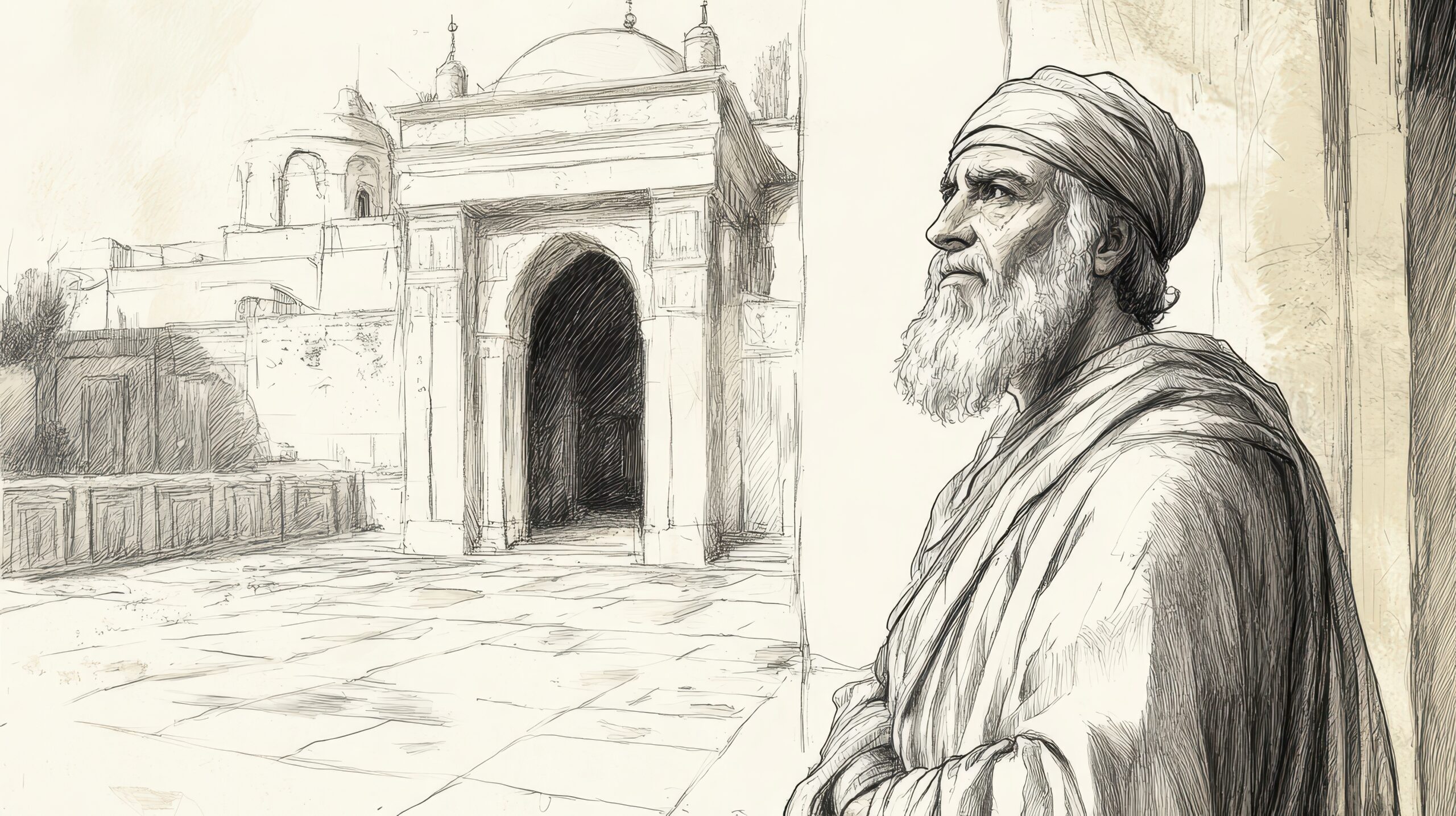
Esther is now queen. Mordecai still comes daily to the king’s gate. Haman is exalted by the king but Mordecai won’t bow to him. The plot for revenge begins to take shape.
This is the first time Mordecai has admitted to his heritage. He has ‘hidden in plain sight’ until something that he cannot hide from forces him to disclose his origins. Haman, wanting to punish ALL Jews for the slight he feels from Mordecai, hatches a diabolical plot. But it takes him a full year to decide to go through with it.
Let’s rejoin our story as things in Susa heat up for the Jews. Holy Spirit, guide our journey today. Direct me to the parts of the story that You want to bring out.
♥ ♦ ♥
Mordecai is comfortable in his ‘new’ life. Very few people, if any, know that he is related to Esther. They think he favors this place to sell his wares, as he brings his baskets to sell each day. He only leaves the king’s gates after they are shut for the evening, and he returns before they open each morning.
Mordecai is not truly here for the ‘traffic’ and sales. He feels that he HAS to stay close to Esther. His heart is clad that she has found safety under the watchful eye of the king, but he can’t stop watching over her. She is the closest thing he has to a daughter. He would never forgive himself if something were to happen to her.
Just before the new year, Haman appears before the king.
“Haman, you have been a faithful advisor for years. It is my desire to honor you. What say you to this?”
“O King Ahasuerus, I am but your humble servant. You do me a great honor just allowing me in your presence.”
Ahasuerus smiles. Haman’s response convinces the king even more of his desire to honor Haman. “I am placing you above all the princes in the land. Those whom you pass in the streets or in the hallways are to bow to you and pay homage. The only one not required to do so is the king himself.”
Haman bows low himself and gives honor to the king. He says nothing for fear of betraying his true heart. Haman has been secretly worming his way into the king’s good graces for a LONG time. When he speaks of the great honor from the king, in his heart he is thinking; “It’s about time!”
Haman leaves the king’s presence and a crier goes before him. The crier will proclaim the news law throughout the land.
“The king chooses to honor Haman. All those who see him are to bow down before him and pay homage to him.”
Haman follows the crier with his head held high. After walking the length of the city, Haman returns to his home. Here he is free to say whatever is on his heart. This is where he, and his wife, have been planning for this day.
“It finally happened” Haman says as he struts through the door. “The king has promoted me above all but himself.”
His wife rushes to greet him. “I knew this day was coming. All the nation will know your greatness!”
Time marches on, as it has since God first spoke it into existence. The only difference is the people bowing and scraping before him. Every bow set’s Haman’s sense of superiority climbing a little higher into the stratosphere. His head is so high that he doesn’t even notice the one person not bowing to him. The man who sits at the king’s gate selling baskets; Mordecai.
Mordecai isn’t outright disrespectful and he doesn’t make a show of not bowing. He simply goes about his business as though Haman is some ordinary person. One no more worthy of reverence than himself.
Even though Haman isn’t noticing Mordecai’s behavior, the guards at the gate are. The first few times it happened, they didn’t really notice, as they were too busy bowing themselves. But after a few instances, they noticed that Mordecai is in the exact same position when they rise. They begin watching him out of the corner of their eyes. When they are certain that Mordecai is not bowing, the decide to confront him.
“Mordecai, have you heard that it is the king’s edict to bow before Haman?”
“I have heard” Mordecai says with a shrug of his shoulder.
The guards look at one another in confusion. “But you don’t bow.”
“No. I don’t” Mordecai admits without a trace of guilt or shame.
“WHY? ‘Why do you transgress the king’s command?’ (Esther 3:3).”
“I am a Jew and my God has me bow to Him alone. I don’t bow to man.”
Both men look at one another in confusion and suspicion. They turn and make their way back to their posts. From this day forward, though, they make a point of watching Mordecai and challenging him for not bowing.
After two weeks of challenging Mordecai, and getting the same answer, they decide to take it up a notch.
“I wonder if his answer will be the same if Haman challenges him. He may fold at that point.”
“Let’s tell Haman what we have observed and see what happens.”
The next, when Haman comes, one of the guards asks for a private word with him (after bowing of course). Initially Haman tries to brush the guard’s request aside, but the insistence in his eyes convinces him that he needs to listen.
“What is it? I don’t have all day” snaps Haman.
Haman’s attitude almost convinces the guard that Haman is unworthy of honor; almost. When the two are out of Mordecai’s hearing, the guard tells Haman what he has observed.
“My lord Haman, Mordecai does not bow to you when you pass. We have questioned him repeatedly on this matter. We have told him that the king commanded that all people bow, but he says that he is a Jew and their God tells them not to bow to anything but Him.”
“Is that so” Haman says while cutting his eyes over to where Mordecai is sitting. “We will see about that.”
Haman makes a point of walking right up to Mordecai for the next week. Mordecai pretends that he doesn’t see Haman. Haman certainly sees Mordecai, and every time he sees him looking away, he becomes angrier. By the end of the ‘test week’ Haman wants not only Mordecai dead but his WHOLE people. “If that’s what his people are like, the kingdom will be better off without them!”
Haman isn’t ready to act just yet. He needs to seek the god’s input and favor regarding this matter. The month Haman decided to do away with the Jews was the first month of the Jewish year. From the day he decides in his heart to get back at Mordecai, he begins seeking his gods. Every day, he has someone cast lots in his presence. He records the answer and then moves on about his day. For a full year, Haman has men casting lots before him. He wants to make certain he doesn’t misinterpret his god’s instructions.
No matter what Haman tries with Mordecai, he gets the same results. Mordecai flat out ignores him. As the months march on, Mordecai begins to secretly take pleasure in ignoring Haman. The more indignant Haman becomes, the more quietly Mordecai reacts.
And after every encounter, Haman comes home more and more angry. His wife tries to comfort him. She already stands behind him in his decision to destroy the Jews.
The end of the year has arrived. Haman counts up the responses to the casting of lots. There isn’t really an overwhelming ‘winner’ (act or not act) but Haman’s own heart tips the balance. It’s time to approach the king.
Haman knows that he has to be careful how he does this. It cannot seem like a personal score to settle. He has to make it appear to be in the king’s best interest to eliminate the Jews. At the last minute, Haman decides to sweeten the pot by offering to pay the price of ridding the kingdom of these ‘rebellious’ Jews.
Haman’s wife readies his best robe and headdress while he washes. She knows that he needs to look his best when he approaches the king today.
“When will you approach the king” she asks.
“I will go to him first thing this morning. He addresses matters of state first each day.”
“And the gods told you to do this thing?”
“They most certainly did” Haman replies. In the deepest part of his heart, there is a voice saying that he is lying. Haman has learned to tune out this voice a long time ago, but it is still there.
King Ahasuerus comes to sit on his throne. There are few matters of state that he needs to address this morning. A requisition for aid, restructuring the guard rotation, and allotting more storehouses to the city. Once this business is done, Haman comes to stand before the king. He bows low and waits for the king to acknowledge him.
“Haman, my faithful servant. What news of the empire do you have to report today?”
This is the PERFECT question for the king to pose. Haman is almost giddy; almost. He clears his throat and begins.
“There is a certain people scattered abroad and dispersed among the peoples in all the provinces of your kingdom. Their laws are different from those of every other people, and they do not keep the king’s laws, so that it is not to the king’s profit to tolerate them. If it please the king, let it be decreed that they be destroyed, and I will pay 10,000 talents of silver into the hands of those who have charge of the king’s business, that they may put it into the king’s treasuries” (Esther 3:8-9).
Ahasuerus nods his head in time to the pronouncement Haman has made. He wants to keep rebellion down at all cost. He removes his signet ring and holds it out towards Haman. “The money is given to you, the people also, to do with them as it seems good to you” (Esther 3:11).
It takes everything in Haman not to let out a victory shout. As Haman waits, Ahasuerus calls for a scribe. When the scribe is ready, Ahasuerus motions for Haman to take over from here.
“Let it be know in all the provinces that on the 13th day of Adar, ALL the people are to rise up against the Jews. Destroy, kill, and annihilate ALL the Jews; young, old, men, women, and children. After the Jews are destroyed, their property is to be considered plunder.”
The scribe enlists the help of others scribes to help him translate the edict into all the languages used in the Persian empire. When all is ready, Haman seals each document with the king’s signet ring. Runners materialize almost out of thin air. They begin taking the documents and running to the cities where the letters will be read to the people.
By nightfall, most of the nearby provinces hear the king’s edict. It will take months to reach the farthest provinces, including the province Beyond the River. Many stand there with their mouths hanging open. When morning breaks, the whole city of Susa is in an uproar over the king’s latest edict. They have almost a year to digest this despicable command and prepare for it.
(to be continued)
It is interesting how one man’s action can impact the world. ONE man decided not to bow. ONE man decided to punish a whole race for the actions of ONE man. I can’t help but think about how MY single actions impact the world around me. Certainly nothing on the scale that Mordecai’s actions resulted in. My mother-in-law’s tears drove me to action today and it impacted the homes around us. She is distraught that the neighbor is putting up a fence across the street from us. It blocks her view of the creek, which she has been able to see for the last 50+ years. I made a plea to the neighbor on her behalf and they listened. She will still be able to view the creek, but not as unobstructed as before. They want privacy while down on the banks. Sometimes it pays to speak up.
There is another ‘One Man’ whose actions rocked eternity! Jesus’ actions reach even farther that Mordecai or Haman’s. The way Jesus lived, the words He spoke, and the reason He came still impact the world. And His actions stirred up even more hate than Mordecai’s did. And He DID NOT back down.
Father God, help me to stand up when it matters most. Help me sit down when the battle is not mine to fight. And help me to KNOW the difference between them. There are MANY battles raging today that I could ‘weigh in on’, but they are not mine to fight.
When I do step up, Lord, give me the words to say that will bring about peace and restoration. I know that sometimes, restoration comes through struggle. Help me stand firm through those times too.