
Acts- Stephen Stoned

We have reached the first of Jesus followers to be killed for his faith, Stephen. He dies only after delivering Jesus’ message of redemption.
The Christian faith considers Stephen to be the first martyr for the faith. AFTER Jesus he was, but scores of people died before him defending the message of the Lord. Most of them the prophets of the Old Testament.
“Therefore I send you prophets and wise men and scribes, some of whom you will kill and crucify, and some you will flog in your synagogues and persecute from town to town, so that on you may come all the righteous blood shed on earth, from the blood of righteous Abel to the blood of Zechariah the son of Barachiah, whom you murdered between the sanctuary and the altar. Truly, I say to you, all these things will come upon this generation” (Matthew 23:34-36).
Jesus counted them all against the religious leaders of His time. Stephen sets a precedence. And we meet a young man who will become integral to the church AFTER he meets Jesus. Let’s rejoin our story and watch as the faithful begin to fall.
Holy Spirit, guide this journey today. Show me the love and faithfulness of the early church. Let me see their steadfast dedication to Jesus’ words and principles. Show me what to take for my own life as well.
♥ ♦ ♥
The church continues to grow by leaps and bounds. Every day, multitudes are added to the family of believers. And they come from all walks of life. Jerusalem is a missionary field for the growing body of Christ. No. Not everything is perfect, but the people are always on the lookout for one another.
There is a growing concern by the Greek speaking Jews that their widows are being slighted in the daily distribution of food in the body of believers.
A counsel of the twelve is called to discuss this issue.
“Our widows aren’t being served until everyone else has eaten. And most times, there is little left for them” complains the leader of this group of believers.
“That ought not to be” responds James, the brother of Jesus.
“Someone needs to keep watch over the tables and ensure that all the widows are cared for, no matter where they are from” suggests Matthew.
“But what about continuing to spread the gospel? If we stand watch over the tables, who will spread Jesus’ message” asks Andrew.
Peter has a suggestion to offer. “It is not right that we should give up preaching the word of God to serve tables. Therefore, brothers, pick out from among you seven men of good repute, full of the Spirit and of wisdom, whom we will appoint to this duty. But we will devote ourselves to prayer and to the ministry of the word” (Acts 6:2-4).
Heads nod around the room and names of possible candidates quickly flow. The men named have all been serving since the beginning of the ministry. Some even walked with Jesus while still on earth. After a bit of discussion, seven names are settled on: Stephen, and Philip, and Prochorus, and Nicanor, and Timon, and Parmenas, and Nicolaus, a proselyte of Antioch.
The men are all called to stand before the apostles. When they are all gathered together, Peter gives them their task.
“You will watch over the distribution of food each day; especially to the widows. Make certain that ALL are cared for and welcomed. It has been observed by others that the Hellenist’s widows have been denied access to care. Make certain that this is corrected. We care very much about this issue, but must continue to spread the word and pray. Will you take on this precious task for the Lord?”
All seven step forward. “We will serve as the Lord Himself would serve. With humility, love, and diligence.”
“That is all He asks” Peter says. “We will pray over you and for you in your task.”
The apostles gather around the seven and commit them to the work of the Lord.
“Bless the hands that serve and the hearts that seek to do Your will. Give them wisdom and discernment in their tasks. We commit them and their tasks to Your will Jesus. Help them love like You love and serve as You served while You walked with us. And as You still love and serve as our advocate with the Father.”
The seven are installed that very day into their new positions. All diligently ensure that EVERY widow and orphan is cared for, regardless of their affiliation. The complaint is laid to rest. Any others that arise are also quickly addressed.
Stephen, one of the seven, becomes a target of several other sects in Jerusalem. They are jealous of the miracles and teaching being delivered by the Holy Spirit through Stephen.
“He is going to become as popular as Peter if we don’t do something NOW” rages one of the leaders of the opposition.
“And what do you suggest we do? Every time we try and debate with him, he comes out on top. It’s humiliating!”
“We could plant rumors about his character.”
“Anyone who know him would see right through them.”
“I have an idea. It might be a bit tricky to pull off, but if it works, we could be rid of him forever.”
When the man fell silent, another prompts him. “Go on. Tell us the idea.”
“We hire someone to report him to the ruling counsel, saying that he is speaking against Moses and the Law.”
“But then we would be breaking God’s commandment not to lie.”
“Not really. We would not be doing the lying. Someone else would.”
Heads nod around the room. Several also shake, wanting no part of this plan. The majority though are on board. By evening the plan is put into effect. Three witnesses are hired, to make it convincing, and they are given the charges to level against Stephen.
The next day, the campaign begins. They don’t take the charges straight to the religious leaders, but to the people, scribes and the elders.
“We have heard him speak blasphemous words against Moses and God” (Acts 6:11).
Like a spark in dry grass, this false testimony begins to burn in the hearts of those who hear it and to spread across the city. Only days after the rumor starts, Stephen is arrested.
Stephen is serving in the tent for feeding the widows and orphans when a group of people ask to see him.
“Nicolaus, will you take over for me while I see what these people need?”
“Certainly. Take your time.”
Stephen steps outside of the tent to meet with the group. The instant he comes out, hands grab him fast.
“We are taking you to the ruling counsel. You will be tried for your crimes before them.”
“What crimes? I have done nothing wrong” protest Stephen.
The hands don’t release Stephen, and he refuses to fight back. He doesn’t want to accidentally hurt anyone. He lets himself be pushed along. But he silently prays along the way.
The group reaches the chambers of the Sanhedrin. They propel Stephen into the room ahead of themselves. Stephen nearly stumbles as he is pushed across the threshold.
“This man never ceases to speak words against this holy place and the law, for we have heard him say that this Jesus of Nazareth will destroy this place and will change the customs that Moses delivered to us” (Acts 6:13-14) the false witnesses call out.
Jaws drop as they stare at Stephen. How could one who looks so angelic be so vile? Rather than condemning him immediately, they start looking for an explanation.
Caiaphas asks with doubt creeping into his words; “Are these things so?” (Acts 7:1).
Stephen turns his head to make eye contact with everyone in the Sanhedrin chamber. He silently prays as he scans the room. After a moment, he feels the Holy Spirit rise up within him. His voice ringing clearly through the chamber, Stephen shares the gospel message.
“Brothers and fathers, hear me…” Stephen looks around again, to insure that all are paying attention. “…The God of glory appeared to our father Abraham when he was in Mesopotamia, before he lived in Haran, and said to him, ‘Go out from your land and from your kindred and go into the land that I will show you.’ Then he went out from the land of the Chaldeans and lived in Haran. And after his father died, God removed him from there into this land in which you are now living…” Stephen raises a finger for emphasis. “… Yet he gave him no inheritance in it, not even a foot’s length, but promised to give it to him as a possession and to his offspring after him, though he had no child. And God spoke to this effect—that his offspring would be sojourners in a land belonging to others, who would enslave them and afflict them four hundred years. ‘But I will judge the nation that they serve,’ said God, ‘and after that they shall come out and worship me in this place.’…” Stephen spreads his arms wide to encompass the land of Israel. “…And he gave him the covenant of circumcision. And so Abraham became the father of Isaac, and circumcised him on the eighth day,…” Without even realizing it, all the men cover their sensitive parts. “…and Isaac became the father of Jacob, and Jacob of the twelve patriarchs.
“And the patriarchs, jealous of Joseph, sold him into Egypt; but God was with him and rescued him out of all his afflictions and gave him favor and wisdom before Pharaoh, king of Egypt, who made him ruler over Egypt and over all his household…” Stephen raises his finger to indicate an important shift. “…Now there came a famine throughout all Egypt and Canaan, and great affliction, and our fathers could find no food. But when Jacob heard that there was grain in Egypt, he sent out our fathers on their first visit. And on the second visit Joseph made himself known to his brothers, and Joseph’s family became known to Pharaoh. And Joseph sent and summoned Jacob his father and all his kindred, seventy-five persons in all. And Jacob went down into Egypt, and he died, he and our fathers, and they were carried back to Shechem and laid in the tomb that Abraham had bought for a sum of silver from the sons of Hamor in Shechem…” Stephen points in the direction of Shechem.
“…But as the time of the promise drew near, which God had granted to Abraham, the people increased and multiplied in Egypt until there arose over Egypt another king who did not know Joseph. He dealt shrewdly with our race and forced our fathers to expose their infants, so that they would not be kept alive…” Stephen’s face takes on anger over this injustice. “… At this time Moses was born; and he was beautiful in God’s sight. And he was brought up for three months in his father’s house, and when he was exposed, Pharaoh’s daughter adopted him and brought him up as her own son. And Moses was instructed in all the wisdom of the Egyptians, and he was mighty in his words and deeds.
“When he was forty years old, it came into his heart to visit his brothers, the children of Israel. 24 And seeing one of them being wronged,…” Stephen stepped forward as if he himself was defending the wronged man. “…he defended the oppressed man and avenged him by striking down the Egyptian. He supposed that his brothers would understand that God was giving them salvation by his hand, but they did not understand. And on the following day he appeared to them as they were quarreling and tried to reconcile them, saying, ‘Men, you are brothers. Why do you wrong each other?’ But the man who was wronging his neighbor thrust him aside, saying, ‘Who made you a ruler and a judge over us? Do you want to kill me as you killed the Egyptian yesterday?’…” Stephen’s face shows the shock Moses would have registered at this comment. “… At this retort Moses fled and became an exile in the land of Midian, where he became the father of two sons.
“Now when forty years had passed, an angel appeared to him in the wilderness of Mount Sinai, in a flame of fire in a bush. When Moses saw it, he was amazed at the sight, and as he drew near to look, there came the voice of the Lord: ‘I am the God of your fathers, the God of Abraham and of Isaac and of Jacob.’ And Moses trembled and did not dare to look…” Stephen looks away as though afraid. “…Then the Lord said to him, ‘Take off the sandals from your feet, for the place where you are standing is holy ground. I have surely seen the affliction of my people who are in Egypt, and have heard their groaning, and I have come down to deliver them. And now come, I will send you to Egypt.’
“This Moses,…” Stephen raises his arm and points his finger in emphasis. “…whom they rejected, saying, ‘Who made you a ruler and a judge?’—this man…” Stephen shakes his finger in emphasis again. “…God sent as both ruler and redeemer by the hand of the angel who appeared to him in the bush. This man…” A third time Stephen shakes his finger. “…led them out, performing wonders and signs in Egypt and at the Red Sea and in the wilderness for forty years. This is the Moses who said to the Israelites, ‘God will raise up for you a prophet like me from your brothers.’ This is the one who was in the congregation in the wilderness with the angel who spoke to him at Mount Sinai, and with our fathers. He received living oracles to give to us…” Stephen’s shoulders drop in defeat. “…Our fathers refused to obey him, but thrust him aside, and in their hearts they turned to Egypt, saying to Aaron, ‘Make for us gods who will go before us. As for this Moses who led us out from the land of Egypt, we do not know what has become of him.’…” Anger flashes in Stephen’s eyes. “…And they made a calf in those days, and offered a sacrifice to the idol and were rejoicing in the works of their hands. But God turned away and gave them over to worship the host of heaven, as it is written in the book of the prophets: ‘Did you bring to me slain beasts and sacrifices, during the forty years in the wilderness, O house of Israel? You took up the tent of Moloch and the star of your god Rephan, the images that you made to worship; and I will send you into exile beyond Babylon.’
Stephen takes a deep sigh before continuing. “Our fathers had the tent of witness in the wilderness, just as he who spoke to Moses directed him to make it, according to the pattern that he had seen. Our fathers in turn brought it in with Joshua when they dispossessed the nations that God drove out before our fathers. So it was until the days of David, who found favor in the sight of God and asked to find a dwelling place for the God of Jacob…” Stephen’s face is all smiles at the thought of the first Temple being erected for the Lord. “…But it was Solomon who built a house for him…” Stephen raises his hands, palms up. “…Yet the Most High does not dwell in houses made by hands, as the prophet says, ‘Heaven is my throne, and the earth is my footstool. What kind of house will you build for me, says the Lord, or what is the place of my rest? Did not my hand make all these things?’
Stephen’s face becomes stern. He turns to look at the whole room. “…You stiff-necked people, uncircumcised in heart and ears, you always resist the Holy Spirit. As your fathers did, so do you. Which of the prophets did your fathers not persecute? And they killed those who announced beforehand the coming of the Righteous One, whom you have now betrayed and murdered, you who received the law as delivered by angels and did not keep it” (Acts 7:2-52).
The whole time Stephen is speaking, the religious leaders are grinding their teeth. “Does he think us idiots? We know the stories as well.” His final words angered them the most, but they held their places. He has not spoken words worth of punishment; yet.
After finishing sharing the story of the people, Stephen looks towards heaven. Through the Holy Spirit, Stephen is given an amazing gift of seeing into God’s throne room. And he tells the religious leaders exactly what he sees.
“Behold, I see the heavens opened, and the Son of Man standing at the right hand of God” (Acts 7:56).
Pandemonium ensues as the religious leaders all rush at Stephen. With hands cupped over their ears so they can hear no more of Stephen’s words, shouts of “Blasphemy!” “Guilty!” “He deserves death!” fill the room.
Stephen is seized by the Temple guards.
Caiaphas points a finger towards the door and shouts; “Take him away, NOW! Carry him outside the city where he will meet his death.”
Caiaphas turns to the others and motions for them to follow him. “We will make certain that he spreads no more of his lies and blasphemy!”
Stephen is escorted bodily out of the city. He doesn’t put up any resistance. He remembers the stories of Jesus being taken captive and putting up no resistance.
Once outside the city, the ruling counsel forms a ring around Stephen.
“Wait!” calls Caiaphas. “We cannot stone him while wearing our official robes.”
A young man named Saul, who is in his early years of training, is designated to watch over the robes. Each man removes his official robe and lays it at Saul’s feet. Then each man returns to the circle.
Caiaphas bends down and picks up two good sized rocks. The rest of the group does the same. Caiaphas hurls one of his rocks and strikes Stephen in the shoulder. As soon as it impacts Stephen, other rocks are launched at him.
As the first volley of rocks strike Stephen, he cries out to the Lord. Not for safety or for judgment on his enemies. But for welcome into his Savior’s arms.
“Lord Jesus, receive my spirit” (Acts 7:59).
The stones continue to pelt Stephen. Their impact drives him to his knees and he calls out to the Lord one last time. Not for himself, but for those who are hurling the stones that will leave him lifeless.
“Lord, do not hold this sin against them” (Acts 7:60).
Stephen lies dead in the center of the circle. Rocks finally stop flying. The anger raging in those hurling the rocks could not drown our Stephen’s final words. Their hearts are pricked as they remember these same words spoken by Jesus as He hung on the cross. Only time will tell the impact these words will have in each of the lives who bore witness to them.
After a few minutes, the circle breaks up and the leaders each retrieves their cloaks from the feet of Saul. For today, they feel vindicated. They walk back to the chambers of the Sanhedrin, proud of their actions of today.
This event did not go without witnesses. Most people are too afraid to get involved, so they turned away as the procession left the city. A young boy watched and wept. When the rulers walk away, he sneaks over to the body of Stephen. He puts his hand on his shoulder.
“I will go tell the believers.”
He rushes back inside the city in search of someone he knows will care. He finds his ima in the serving tent.
“Ima, you have to come quick. Stephen is dead.”
His ima’s hands fly to her mouth and her eyes go wide. “Are you certain” she asks.
“I saw them drag him from the city and watched as the men threw rocks at him. He isn’t moving anymore.”
Their conversation is overheard and several others gather around. After sharing the story with all those present, Nicolas, the one on duty in the tent, sends a runner to the home of the apostles.
Within minutes of hearing the story, linen wrapping is secured and a group of believers follow the boy to the place where Stephen’s body lies.
Mournful wails erupt as the site of Stephen’s body fills their eyes. The boy shares the last words he heard Stephen speak as he was being stoned.
The men quickly wrap his body in the linen and carry it to the home of the apostles. Here he is washed and prepared for burial.
“We knew this would happen sooner of later” Peter reminds the others.
“He is the first of many who will fall for faith in Jesus” John tells them all. “And he will be welcomed and rewarded by Jesus Himself for his sacrifice.”
Though losing Stephen hurt, they all rejoiced that he gave his life for his Lord.
(to be continued)
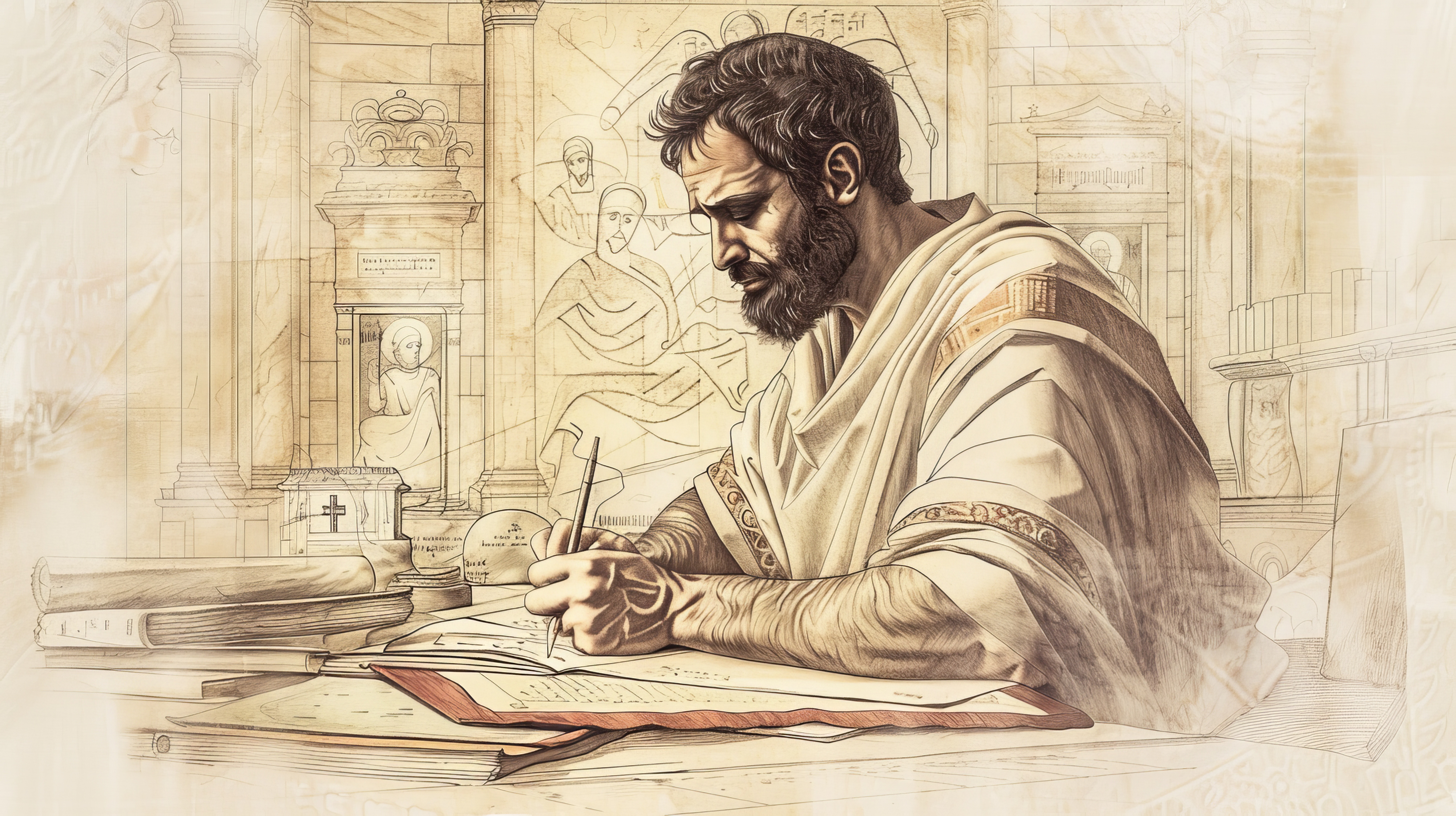
I wonder what it looked like, gestures and such, as the men of God delivered long messages. I wondered if they walked the stage, like we see so many speakers do today. Apparently not. But hand gestures were used. I suppose I got that right anyway. But that is beside the point of our story.
Stephen was a truly faithful man. And he loved the Lord more than his own life. I wonder how many people actually listened to what he was saying and came to faith in Jesus. There had to be some. For the sake of even ONE the message is delivered. Even today. God cares about the one as much as He does about the multitude.
Father God, thank You for sharing Your story, from beginning to end with us. There is still so much to be written. I wonder what it will look like during the final retelling. And when will that be? During the Millennial reign? After the final battle with Satan? Or in the new Jerusalem? I guess I will have to wait and see.
Will our time figure into the final ‘cut’? Probably not, as I don’t have that great of an influence, but at least I know I’m part of Your story and Your plan. That is enough for me.