Matthew Shares His Memories
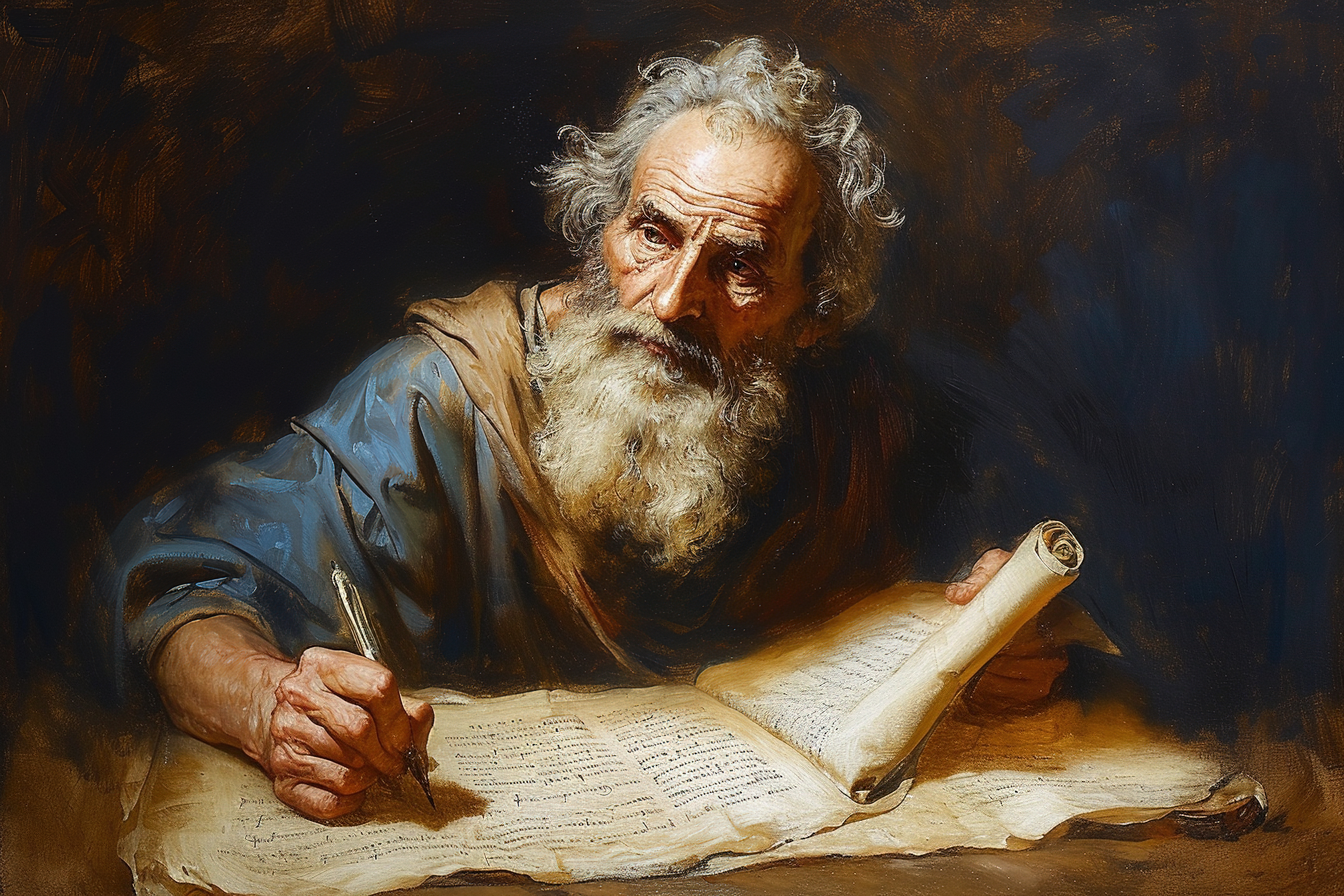
Matthew shares his memories and perspective of Jesus’ ministry with the Jewish community at large. Some believe he was the first gospel writer.
As a former tax collector, Matthew probably had the most familiarity with recording events. This would have been part of his daily routine. We know that Judas was the ‘keeper of the purse’. It is probable that Matthew was the ‘keeper of the daily record’.
I have looked multiple times and in multiple places to find the order of the gospels. The first searching put Matthew as the third, now it is saying he was the first. I’m more inclined to believe this latest positioning for a couple of reasons.
The main reason Matthew probably came first, is that the early church was predominantly Jewish. Matthew writes with a Jewish perspective. The other authors highlight the fact that Jesus came for the Gentiles as well.
The final reason I’m inclined to believe this second order is that Luke actually mentions other writings in his opening statement to Theophilus. “Many have undertaken to draw up an account of the things that have been fulfilled among us, just as they were handed down to us by those who from the first were eyewitnesses and servants of the word. Therefore, since I myself have carefully investigated everything from the beginning, it seemed good also to me to write an orderly account for you, most excellent Theophilus, so that you may know the certainty of the things you have been taught” (Luke 1:1-4). I didn’t put that together with a different writing order until now.
On the other hand, scholars say that “Matthew used Mark’s work as 95% of Mark’s material is also in Matthew’s work. To them I would say, “Of course. They are writing about the same Person and are being guided by the same Spirit.” I will worry about reworking the stories when I go to assemble them later, to put Matthew as the first author. For now, let’s join Matthew as he pens his account of Jesus’ life, under the guidance of the Holy Spirit.
Holy Spirit, I ask You to guide my words as You did with Matthew’s. I know that my telling of this story isn’t something to be held onto throughout history as authoritative. But I pray that it still bears Your stamp of approval and flavor of truth. Help me see the story as it unfolded so long ago.
♥ ♦ ♥
Matthew is part of the leadership of the new church in Jerusalem. He was as rocked with grief as the rest of the community when Stephen was stoned. Yes. Stephen walked in the Lord’s footsteps and that was praise worthy, but he is missed. More than that, Stephen’s death had an unforeseen effect on the new body of believers. They scattered to the wind. No longer can they come directly to those who walked with Jesus on the dusty roads of Israel with questions or for clarification. The people need continued guidance and continuity. For this purpose, Matthew receives a calling.
The counsel is in session with everyone praying and discussing the situation.
“How will they know if we don’t tell them” asks James.
“They can write letters with their questions” Thaddeus offers.
“By the time the answer reaches them, too much damage could be done” Peter points out. “We need someone to write down the teachings of Jesus so the people can have them.”
Everyone agrees that this is a wise idea. Next, they take it to the Lord for His direction.
“Lord Jesus, we know that You can preserve Your story and events of Your life without our hand if necessary. But we find people struggling with Your teachings already. We need Your guidance, and the Holy Spirit’s hand, in keeping Your teachings just as You delivered them. Show us what to do and whom You would have accomplish this task.”
Matthew’s name comes to everyone’s mind except Matthew’s. John is the first to voice this.
“Matthew needs to do it.”
Agreement rises up throughout the room.
Matthew shakes his head. He does NOT believe himself worthy or the appropriate person to pen Jesus’ life and message. He still sees himself as ‘less than’ the others, as he was once a tax collector. Jews have an exceptionally long memory, especially for other’s faults.
“There is certainly someone better than me to do this. People still see me as the hated tax collector. They would never accept such a work from me. And Jesus’ words NEED to be accepted by all the Jews.”
Peter steps over and puts a hand on Matthew’s shoulder. “That is exactly why you should do it. Because of who you have become because of Jesus.”
“But you were always the first to speak…” Matthew tries.
Peter shakes his head. “You already recorded Jesus’ words during His life. You are the one the Spirit chose.”
Matthew looks around the room at all the nodding heads. He drops his own to his chest. “I’ll try” he says.
“No. You will succeed because the Holy Spirit will be doing this with you. Do not give in to fear or doubt. The Lord Jesus, Himself, called you for a purpose. Who is to say that this is not that exact purpose.”
Matthew looks around the room again. This time he too nods. “I will be the Lord’s voice, as His Spirit gives me what to say.”
Matthew hurries home and begins organizing the stories he has collected over the time with Jesus. As he is used to organizing documents from his previous life, he has little difficulty finding an order that suits his spirit. The overarching theme of Matthew’s presentation is proving that Jesus IS the Messiah. Of this there can be NO doubt.
“Jesus’ genealogy comes first, of course.” This genealogy traces all the way back to Abraham. Matthew follows Jesus’ lineage through His earthly father, Joseph.
As Matthew organizes his work he references the Prophets who spoke of the Messiah. Over and over again, Matthew brings prophecy to bear on the life of Jesus.
From the very beginning Matthew speaks of the prophecies. “Behold, the virgin shall conceive and bear a son, and they shall call his name Immanuel” (Matthew 1:23).
“The people need to know how Jesus fits the prophecies from the very beginning” Matthew tells himself as he writes this story. It is one he heard from Mary on more than one occasion.
“I wish Joseph could have been around to share the story himself” thinks Matthew. “I wonder what other stories he would have shared.”
Matthew knows the futility of this, as Joseph had already gone to way of his ancestors before Jesus’ ministry began. “I have to tell of Joseph’s faithfulness is protecting Jesus though” Matthew surmises as he includes a few crucial stories that could have ended in disaster, if not for Joseph obeying the voice of the Lord.
“You chose well Father God” Matthew says as he looks back over the story of Herod’s murderous order for the children under the age of two and Joseph’s moving the family to Nazareth when the danger was ended.
“Nazareth. Of all the places in Israel to raise up Your Son” Matthew says as he shakes his head. “And again, YOU foretold it!”
Matthew quickly leaves Jesus’ childhood behind. “He never talked much about His time as a child. I wonder why” Matthew muses. Instead of getting bogged down in questions, the Spirit leads Matthew to the beginning of Jesus’ emergence; John the Baptizer’s proclamations and preparing the way of the Lord.
Matthew, again, references the words of the prophets regarding the Messiah. “The voice of one crying in the wilderness: ‘Prepare the way of the Lord; make his paths straight’” (Matthew 3:3).
Guided by the Spirit, Matthew jumps right in with Jesus. From His baptism, where the Lord spoke and identified Jesus, to Jesus’ temptation in the wilderness, to the first disciples He chose.
“Am I moving to fast Lord?” Matthew asks as he writes about the crowds following Jesus.
In his spirit he feels the peace of the Spirit. To him, this is the answer he was seeking. This is exactly how Jesus’ story needed to unfold.
No sooner did Matthew’s question receive an answer that he hit a point in Jesus’ ministry where he slows down considerably. This is the time Jesus went on a hillside and taught the people what God’s Kingdom is to be like and how the followers of Him are to live.
Because of Matthew’s previous occupation, he had the ability to transcribe word for word what someone said. He used this skill multiple times in his walk with Jesus, but this time was one of his most memorable times. He, and Jesus, worked together for days, formalizing the flow of the message and all that Jesus wanted brought out in it. NOT that Jesus needed help preparing His message, but that He knew Matthew would need to remember this event for this very time.
Matthew pulled out his notes from that day and transcribes Jesus’ words for ALL to hear. “Lord, You knew even then that THIS day would come. Thank You for preparing me in advance. I don’t know if I could have brought it all up from memory.”
The Spirit has Matthew share the reason, purpose, for His disciples. They would be the ones to carry His message after He no longer walked the earth. Matthew shares their stories, including all the miracles Jesus performed for those who sought Him. “Jesus was training them for this day even then” Matthew muses.
Matthew takes a deep breath as he comes to a particular event in Jesus’ early ministry. It is the calling of himself from his tax booth. “I still wonder why You chose me Lord. A filthy tax collector. Hated by the people, but called by You.”
Thinking back over that moment, Matthew wonders exactly what made him walk away from his former life. “It wasn’t that I was ‘unhappy’, but when Jesus spoke my name and said to follow Him, it was as if nothing else in the world existed or mattered. I was drawn to him as surely as a fisherman is drawn to the sea.”
Matthew continues sharing Jesus’ miracles while training His disciples. Then he shares the reason behind Jesus’ calling of disciples; “The harvest is plentiful, but the laborers are few; therefore pray earnestly to the Lord of the harvest to send out laborers into his harvest” (Matthew 9:37-38).
“For this day too, Lord Jesus. This is why You chose us and trained us to walk in Your ways.”
Matthew makes certain to include that Jesus used those He trained to minister to others.
“That first foray into ministry was easy, compared to today Lord. But You warned us beforehand even about that” Matthew whispers to the Spirit as he writes of Jesus sending out the twelve; with nothing but Jesus’ words and authority.
“Go nowhere among the Gentiles and enter no town of the Samaritans, but go rather to the lost sheep of the house of Israel. And proclaim as you go, saying, ‘The kingdom of heaven is at hand.’ Heal the sick, raise the dead, cleanse lepers, cast out demons. You received without paying; give without pay. Acquire no gold or silver or copper for your belts, no bag for your journey, or two tunics or sandals or a staff, for the laborer deserves his food. And whatever town or village you enter, find out who is worthy in it and stay there until you depart. As you enter the house, greet it. And if the house is worthy, let your peace come upon it, but if it is not worthy, let your peace return to you. And if anyone will not receive you or listen to your words, shake off the dust from your feet when you leave that house or town. Truly, I say to you, it will be more bearable on the day of judgment for the land of Sodom and Gomorrah than for that town” (Matthew 10:5-15).
“I will go boldly Lord, no matter what the cost. I only follow in Your footsteps.” Matthew smiles as he relates Jesus’ words regarding fearing this calling.
“So have no fear of them, for nothing is covered that will not be revealed, or hidden that will not be known. What I tell you in the dark, say in the light, and what you hear whispered, proclaim on the housetops. And do not fear those who kill the body but cannot kill the soul. Rather fear him who can destroy both soul and body in hell. Are not two sparrows sold for a penny? And not one of them will fall to the ground apart from your Father. But even the hairs of your head are all numbered. Fear not, therefore; you are of more value than many sparrows. So everyone who acknowledges me before men, I also will acknowledge before my Father who is in heaven, but whoever denies me before men, I also will deny before my Father who is in heaven” (Matthew 10:26-33).
Matthew continues writing the stories of walking with Jesus, including the visit from disciples of John the Baptizer. Jesus doesn’t come right out and proclaim He is the Son of God, the Messiah, but anyone who truly has ears to hear will understand.
“You told the people not to tell of Your wonders, but they couldn’t keep silent. I can’t either.”
Looking back into the prophets, Matthew shares the proof again that Jesus is the embodiment of prophecy, even in trying to keep His ministry quiet.
“Behold, my servant whom I have chosen, my beloved with whom my soul is well pleased.
I will put my Spirit upon him, and he will proclaim justice to the Gentiles. He will not quarrel or cry aloud, nor will anyone hear his voice in the streets; a bruised reed he will not break, and a smoldering wick he will not quench, until he brings justice to victory; and in his name the Gentiles will hope” (Matthew 12:18-21).
After a few more examples, Matthew turns his attention to Jesus’ parables.
“You have AMAZING wisdom Lord. If only the people would listen. And I KNOW there is still more to what You taught us that I haven’t even unveiled.”
Matthew records a memory relating to Jesus being questioned about parables.
“Then the disciples came and said to him, ‘Why do you speak to them in parables?’ And he answered them, ‘To you it has been given to know the secrets of the kingdom of heaven, but to them it has not been given. For to the one who has, more will be given, and he will have an abundance, but from the one who has not, even what he has will be taken away. This is why I speak to them in parables, because seeing they do not see, and hearing they do not hear, nor do they understand. Indeed, in their case the prophecy of Isaiah is fulfilled that says: “You will indeed hear but never understand, and you will indeed see but never perceive.” For this people’s heart has grown dull, and with their ears they can barely hear, and their eyes they have closed, lest they should see with their eyes and hear with their ears and understand with their heart and turn, and I would heal them.” But blessed are your eyes, for they see, and your ears, for they hear. For truly, I say to you, many prophets and righteous people longed to see what you see, and did not see it, and to hear what you hear, and did not hear it’” (Matthew 13:10-17).
“We were indeed blessed. Only we didn’t understand it at the time.”
Matthew turns his attention to one of the hardest moments in Jesus’ life; the death of His cousin John the Baptizer. He shakes his head remembering how the people wouldn’t even give Jesus time to grieve. Then he smiles, remembering the miracles that followed.
“Feeding five THOUSAND with five loaves and two fish. You can’t make this stuff up! And to top it all off, YOU WALKED ON WATER!” Matthew thinks back on that moment. “I wish I had Peter’s faith and asked to come out of the boat too. He was always the brave one. NO WAY was I going to try it after he sank. But even then, You saved him.”
Matthew returns to stories of Jesus interactions with the religious leaders and then Gentiles. He smiles as he recalls the second ‘miraculous dinner engagement’. “Feeding four THOUSAND Gentiles with seven loaves and a few small fish. You showed Your love and mercy to many Gentiles; even beyond the meal. You healed all who came to You.”
Matthew turns his attention again to the Jews, as they are the ones he is addressing. He knows that Jesus love extends to all, but He came to the Jews first. And He IS Jewish; of David’s line.
“The Pharisees and religious leaders should have been the ones heralding Your appearance, yet they fought You at every turn.” Matthew knows that this too was part of God’s plan but he shares some of the stories of Jesus butting heads with this stiff necked group.
Matthew continues with the stories and this next one puts a lump in his throat. The day Jesus first told His disciples that He would be killed. This was right after Peter’s confession that Jesus truly is the Son of God.
“We skipped right over the, ‘raised again in three days’ part. Why were our eyes blind to this? Was it part of Your Father’s plan?” Matthew chuffs out a breath and thinks; “Probably.”
The story Matthew tells next isn’t one he personally witnessed, but that he learned of after Jesus’ resurrection. “What I wouldn’t have given to be on that mountain with Peter, James, and John. But then again, it was part of God’s plan.”
“Jesus took with him Peter and James, and John his brother, and led them up a high mountain by themselves. And he was transfigured before them, and his face shone like the sun, and his clothes became white as light. And behold, there appeared to them Moses and Elijah, talking with him. And Peter said to Jesus, ‘Lord, it is good that we are here. If you wish, I will make three tents here, one for you and one for Moses and one for Elijah.’ He was still speaking when, behold, a bright cloud overshadowed them, and a voice from the cloud said, ‘This is my beloved Son, with whom I am well pleased; listen to him.’ When the disciples heard this, they fell on their faces and were terrified. But Jesus came and touched them, saying, ‘Rise, and have no fear.’ And when they lifted up their eyes, they saw no one but Jesus only.
“And as they were coming down the mountain, Jesus commanded them, ‘Tell no one the vision, until the Son of Man is raised from the dead.’ And the disciples asked him, ‘Then why do the scribes say that first Elijah must come?’ He answered, ‘Elijah does come, and he will restore all things. But I tell you that Elijah has already come, and they did not recognize him, but did to him whatever they pleased. So also the Son of Man will certainly suffer at their hands.’ Then the disciples understood that he was speaking to them of John the Baptist” (Matthew 17:1-13).
After a few other tales of Jesus’ moments with the people and His disciples, Matthew focuses of forgiveness. “This is such an important aspect for all of us to grasp. You have forgiven us and we MUST forgive others.”
Matthew records Jesus’ parable about unforgiveness, after telling His disciples how to handle matters between brothers. “These instructions were for us now Lord. The brotherhood of believers.”
“Then Peter came up and said to him, ‘Lord, how often will my brother sin against me, and I forgive him? As many as seven times?’ Jesus said to him, ‘I do not say to you seven times, but seventy-seven times.’
‘“Therefore the kingdom of heaven may be compared to a king who wished to settle accounts with his servants. When he began to settle, one was brought to him who owed him ten thousand talents. And since he could not pay, his master ordered him to be sold, with his wife and children and all that he had, and payment to be made. So the servant fell on his knees, imploring him, “Have patience with me, and I will pay you everything.” And out of pity for him, the master of that servant released him and forgave him the debt. But when that same servant went out, he found one of his fellow servants who owed him a hundred denarii, and seizing him, he began to choke him, saying, “Pay what you owe.” So his fellow servant fell down and pleaded with him, “Have patience with me, and I will pay you.” He refused and went and put him in prison until he should pay the debt. When his fellow servants saw what had taken place, they were greatly distressed, and they went and reported to their master all that had taken place. Then his master summoned him and said to him, “You wicked servant! I forgave you all that debt because you pleaded with me. And should not you have had mercy on your fellow servant, as I had mercy on you?” And in anger his master delivered him to the jailers, until he should pay all his debt. So also my heavenly Father will do to every one of you, if you do not forgive your brother from your heart”’ (Matthew 18:21-35).
Matthew’s heart is getting heavy as he moves closer to the final week of Jesus’ life. “You were facing so MUCH, and yet You still took the time to deal with our petty struggles; like, who was greatest and positioning in Your Kingdom.” Matthew shakes his head. “Why did You even put up with us? We failed You on so many levels, yet You continued to walk with us and teach us. Not just for those days, but for today as well. It amazes me how much of what we learned at Your feet applies to our lives today. I pray that the Jews and religious leaders will recognize this too, one day, soon.”
A short while later, Matthew turns his full attention to Jesus final week. This includes the ‘good’, the ‘bad’ and the ‘ugly’. Matthew holds nothing back. He begins with the highlight of Jesus entering Jerusalem, hailed as king.
“We thought You were going to set up Your kingdom right then and there. You warned us three times about what was to come, yet we didn’t listen.”
Matthew shares the stories of Jesus’ confrontation by the religious leaders while in Jerusalem. “The hypocrisy was incredible that week. They KNEW who You are, yet they refused to say it.” Matthew shares several parables Jesus used to put the religious leaders on notice.
Looking back over the stories, Matthew feels it is critical to share the ‘woes’ that Jesus pronounced over the Pharisees. They knew the truth and refused to accept it. “It was part or Your plan, but…” Matthew says as he pens Jesus’ words of warning.
“The scribes and the Pharisees sit on Moses’ seat, so do and observe whatever they tell you, but not the works they do. For they preach, but do not practice. They tie up heavy burdens, hard to bear, and lay them on people’s shoulders, but they themselves are not willing to move them with their finger. They do all their deeds to be seen by others. For they make their phylacteries broad and their fringes long, and they love the place of honor at feasts and the best seats in the synagogues and greetings in the marketplaces and being called rabbi by others. But you are not to be called rabbi, for you have one teacher, and you are all brothers. And call no man your father on earth, for you have one Father, who is in heaven. Neither be called instructors, for you have one instructor, the Christ. The greatest among you shall be your servant. Whoever exalts himself will be humbled, and whoever humbles himself will be exalted.
“But woe to you, scribes and Pharisees, hypocrites! For you shut the kingdom of heaven in people’s faces. For you neither enter yourselves nor allow those who would enter to go in. Woe to you, scribes and Pharisees, hypocrites! For you travel across sea and land to make a single proselyte, and when he becomes a proselyte, you make him twice as much a child of hell as yourselves.
“Woe to you, blind guides, who say, ‘If anyone swears by the temple, it is nothing, but if anyone swears by the gold of the temple, he is bound by his oath.’ You blind fools! For which is greater, the gold or the temple that has made the gold sacred? And you say, ‘If anyone swears by the altar, it is nothing, but if anyone swears by the gift that is on the altar, he is bound by his oath.’ You blind men! For which is greater, the gift or the altar that makes the gift sacred? So whoever swears by the altar swears by it and by everything on it. And whoever swears by the temple swears by it and by him who dwells in it. And whoever swears by heaven swears by the throne of God and by him who sits upon it.
“Woe to you, scribes and Pharisees, hypocrites! For you tithe mint and dill and cumin, and have neglected the weightier matters of the law: justice and mercy and faithfulness. These you ought to have done, without neglecting the others. You blind guides, straining out a gnat and swallowing a camel!
“Woe to you, scribes and Pharisees, hypocrites! For you clean the outside of the cup and the plate, but inside they are full of greed and self-indulgence. You blind Pharisee! First clean the inside of the cup and the plate, that the outside also may be clean.
“Woe to you, scribes and Pharisees, hypocrites! For you are like whitewashed tombs, which outwardly appear beautiful, but within are full of dead people’s bones and all uncleanness. So you also outwardly appear righteous to others, but within you are full of hypocrisy and lawlessness.
“Woe to you, scribes and Pharisees, hypocrites! For you build the tombs of the prophets and decorate the monuments of the righteous, saying, ‘If we had lived in the days of our fathers, we would not have taken part with them in shedding the blood of the prophets.’ Thus you witness against yourselves that you are sons of those who murdered the prophets. Fill up, then, the measure of your fathers. You serpents, you brood of vipers, how are you to escape being sentenced to hell? Therefore I send you prophets and wise men and scribes, some of whom you will kill and crucify, and some you will flog in your synagogues and persecute from town to town, so that on you may come all the righteous blood shed on earth, from the blood of righteous Abel to the blood of Zechariah the son of Barachiah, whom you murdered between the sanctuary and the altar. Truly, I say to you, all these things will come upon this generation” (Matthew 23:2-36).
As the rest of the week’s events unfold, Matthew spends time sharing the details of each. The future of what is still to come is especially difficult for Matthew to write. “I know we asked ‘when’ Lord, but will it be soon?”
One special time Matthew focuses in on is Jesus final meal with His disciples. This includes His final warnings of what was to come very soon, regarding His death and resurrection..
“We were all adamant that we would stand for You, and with You.” Matthew has tears in his eyes as he records the moment that everyone fled Jesus’ side. “I ran too.”
“What they did to You was SO WRONG, but SO RIGHT as well” thinks Matthew as he recounts the times Jesus was judged that same night; before Caiaphas, the council, and Pilot. According to Jewish law, this was illegal, but it is what God had ordained.
Matthew shares Peter’s worst act and the heartbreak it brought with it. “I will leave what comes later for Peter to share, if he chooses to” thinks Matthew as he ends the story with the broken hearted Peter.
Also included in Matthew’s telling of this story is Judas’ part in it and how Judas handled the guilt of what he had done. “Judas can’t tell his story, as he killed himself over the guilt of what he had done.”
On to the cross Matthew goes with Jesus’ story. He makes certain to include the crowd rejecting Jesus in favor of Barabbas. “Because the religious leaders stirred them up… and again, it was part of Your plan” Matthew says as he wags his head and records the events as they happened.
Matthew does not dwell on the gruesome details of Jesus’ crucifixion. He doesn’t shy away from the mockery Jesus suffered though; from the soldiers, from those passing by, from the religious leaders looking on, and even from those who were receiving the same sentence as Him.
The moment of Jesus’ death draws from Matthew several facts that show how God’s heart was rent at that very moment.
“And about the ninth hour Jesus cried out with a loud voice, saying, ‘Eli, Eli, lema sabachthani?’ that is, ‘My God, my God, why have you forsaken me?’ And some of the bystanders, hearing it, said, ‘This man is calling Elijah.’ And one of them at once ran and took a sponge, filled it with sour wine, and put it on a reed and gave it to him to drink. But the others said, ‘Wait, let us see whether Elijah will come to save him.’ And Jesus cried out again with a loud voice and yielded up his spirit.
“And behold, the curtain of the temple was torn in two, from top to bottom. And the earth shook, and the rocks were split. The tombs also were opened. And many bodies of the saints who had fallen asleep were raised, and coming out of the tombs after his resurrection they went into the holy city and appeared to many. When the centurion and those who were with him, keeping watch over Jesus, saw the earthquake and what took place, they were filled with awe and said, ‘Truly this was the Son of God!’” (Matthew 27:46-52).
Matthew tells of the women who witnessed Jesus crucifixion, their witnessing His burial, and finally their witnessing His resurrection. “These faithful women were with You all along. And we discounted their testimony.” Matthew doesn’t include the disciples doubt of the women’s account in his story. Instead, he confirms that Caiaphas and the elders KNEW about Jesus’ resurrection and tried to hide it. They bribed the soldiers.
To end his account, Matthew shares Jesus’ final command to His disciples. He knows that Jesus shared this same commission with others as well, but he shares the personal commissioning of His disciples.
“All authority in heaven and on earth has been given to me. Go therefore and make disciples of all nations, baptizing them in the name of the Father and of the Son and of the Holy Spirit, teaching them to observe all that I have commanded you. And behold, I am with you always, to the end of the age” (Matthew 28:18-20).
Matthew sets his pen down and looks over the work he has just completed. “There is still so much more that could be said, and someone who could have said it better.”
Before he can sink further into doubt, he hears the Spirit speaking directly to his heart.
“It is enough. It is exactly as I authored it.”
Matthew raises his hands in praise and surrender. “Thank You Lord. Thank You for using me, and for encouraging me. I pray that Your words and Your story touch hearts and turn them to You. Let them be a beacon in the night, lighting the way for those who are wondering. Let them see, and KNOW that You ARE the Messiah. And that You STILL live.”
After a good night’s sleep, Matthew brings his writings to Peter.
“This is what the Lord has given me to write. Please read it and tell me what you think.”
“I am honored that you asked me to look over your work. I know that this was a commission of the Lord. I also know how organized you are and am confident you have done exactly as the Spirit led you. I want to read it, not to critique it, but so I can soak it all in again.”
Peter drinks in every word Matthew and the Spirit have penned. When he is finished, he takes a deep breath. “You chose well Lord” he says in silent prayer. To Matthew, who has been anxiously waiting, he smiles and nods.
Knowing Matthew needs more, Peter touches his heart and says; “This work is exactly what is needed, including the ending commission of the Lord. That is, after all, what our lives have become now. Thank you for taking this on.”
Matthew breathes a sigh of relief. He feels a weight lift from his shoulders. He knows that he has done the Lord’s work, but it is a relief to be told it was done well by another who lived it with him.
The letter is copied seven times and sent out to the newly scattered believers. They will have the Lord’s own words to refer back to while sharing the gospel.
As any writer would, Matthew thinks of things he wishes he had included, excluded, or said differently, but he has to trust that the Holy Spirit guided his hand throughout the whole letter. He is also very careful to give glory to the Lord whenever someone complements him on his writing.
“I was only telling His story through His hand” he says so many times that it becomes a natural response for him. Jesus’ story will never be forgotten.
(to be continued)
I know I didn’t do Matthew’s telling of Jesus’ story justice. There is so much more that I didn’t include, but I have to trust that the same Author was guiding me as well.
Father God, thank You for letting me tell Your stories. I pray that I shared what YOU wanted me to. You know how inadequate I feel to telling this story. That’s probably why I shared that trait in Matthew.
Let this story bless others. It is NOWHERE near the scope of what You had Matthew author, but I hope it encourages people to read the stories he wrote about.